

 English
 Español
PP Colored Sheet combines the high fatigue resistance of polypropylene with vibrant visual options, commonly used for turnover boxes, outdoor signage, and automotive parts. It features moderate surfac...


News
Home / News / Industry News / Standard PP Sheet: Applications, Selection Criteria, and Practical Guidance
Standard PP Sheet: Applications, Selection Criteria, and Practical Guidance
2026-10-23
Content
A standard PP sheet is a general-purpose polypropylene homopolymer panel, supplied in natural or pigmented form, sold by nominal thickness and sheet size, and intended for ambient-to-warm fabrication work rather than for pressure or elevated-temperature duty. Nearly every argument about it comes down to two words: grade and tolerance.
It is also one of the few engineering plastics cheap enough that buyers stop asking questions. That is exactly how a 6 mm machine guard and a 6 mm tank wall end up on the same purchase order, even though only one of them will still be flat after a year in service.
0.905Density, g/cm3 1 to 30Typical thickness, mm WeldableHot gas, butt, extrusion
What a Standard PP Sheet Actually Is
A standard PP sheet is a monolithic panel extruded from unfilled, unmodified polypropylene homopolymer, with no reinforcement, no UV stabilizer and no flame retardant unless the order specifically asks for them.
Standard is a grade label, not a quality claim. Mills use it to separate general extrusion stock from PPH compounds and from modified, filled or flame-retardant grades. When a drawing simply says PP sheet, the default supply is almost always a natural-colour general-purpose homopolymer with a smooth finish and a thickness tolerance that the mill, not the buyer, chose.
Definition: a standard PP sheet is a solid, unreinforced polypropylene homopolymer panel of uniform composition, produced by extrusion, sold by nominal thickness and sheet dimension, and intended for general fabrication rather than pressure, structural or high-temperature service.
Two details deserve confirmation before anything is cut. First, whether the grade carries a UV package, because unstabilized PP chalks and embrittles outdoors within a couple of seasons. Second, whether the resin and any colorant carry food-contact declarations, because natural PP is not automatically food grade simply for being pigment-free.
Standard PP Versus PPH
Standard PP and PPH are the same polymer family; the practical difference is molecular weight and crystallinity, which show up as creep resistance and heat performance, not as a change in chemical resistance.
Mill naming is not perfectly standardized, so treat the table below as a negotiation aid rather than a law of physics. What matters is that you ask the supplier which grade sits behind the quote and at what continuous temperature it is rated.
| Property | Standard PP | PPH, higher molecular weight |
| Polymer base | General-purpose homopolymer | Homopolymer with higher molecular weight |
| Density | About 0.905 g/cm3 | About 0.905 g/cm3 |
| Continuous service temperature | Roughly 90 to 100 °C, strongly load dependent | Ten to fifteen degrees higher in the same load case |
| Creep under sustained load | Noticeable above about 60 °C | Markedly slower |
| Chemical resistance | Good against acids, alkalis and salts; attacked by strong oxidizers, chlorinated solvents and aromatics | Same family, better retained at temperature |
| Welding | Hot gas, butt and extrusion welding, forgiving window | Same methods, narrower process window |
| Relative sheet cost | Baseline | Typically 10 to 25 percent higher |
In practice the choice is settled by three questions: the continuous temperature the part sees, whether it carries liquid head or a structural load, and how long it must hold shape. A grade-by-grade comparison of standard PP and PPH is worth reading before the drawing is released.
Rule of thumb. Below roughly 60 °C, with no liquid head and no long-term load, standard PP is normally the economical answer. Above that, price PPH before the drawing is frozen rather than after the sheet has been cut.
The Four Numbers That Decide the Specification
Density, heat deflection temperature, water absorption and thermal expansion decide most standard PP sheet specifications, and each one changes how the sheet has to be supported and fixed.
0.905Density, g/cm3
100HDT at 0.45 MPa, °C
<0.02Water absorption, percent
0.15Expansion, mm per m per °C
Density is the fastest sanity check on grade. Unfilled PP sits at 0.90 to 0.91 g/cm3, so a sheet measuring near 1.0 has been filled with talc or calcium carbonate, which changes stiffness, welding behaviour and machinability.
Heat deflection temperature is only meaningful with the load printed beside it. At 0.45 MPa the figure is around 100 °C; at 1.82 MPa it falls to roughly 50 to 60 °C. Quoting the first number for a loaded part is a common and expensive mistake.
Water absorption near zero keeps the sheet dimensionally stable in wash-down and wet process areas, unlike nylon. Thermal expansion is the opposite story: a 2 m panel that swings through 40 °C grows about 12 mm, so slotted holes, generous clearance and expansion gaps are not optional detailing.
PP does not fail suddenly at its heat deflection temperature. It creeps. A panel that is perfectly stiff at 20 °C will bow steadily at 70 °C under the same load and will keep bowing for months. Design for the deflection you can live with, not for the number on the data sheet.
Chemical limits are equally practical. Standard PP shrugs off hydrochloric acid, caustic soda and brine, but strong oxidizing acids, chlorinated solvents and aromatic hydrocarbons attack it. Its low surface energy also makes adhesive bonding unreliable, which is why tanks and ducts are welded rather than glued.
Thickness, Format and Tolerance on the Purchase Order
Most thickness disputes on standard PP sheet trace back to a purchase order that named a nominal thickness but never defined how the sheet would be measured.
Name the grade and colour
State the polymer grade, the colour code and whether the colorant must be food-contact compliant. Leave the grade blank and you will receive whatever general-purpose stock is on the floor that week.
Write the thickness and the acceptance rule
For example: 6 mm nominal, plus or minus 5 percent, measured at five points per sheet, 25 mm in from the edges. Any tolerance without a measurement method is open to interpretation.
Define the sheet size and cut tolerance
Full sheets, sawn blanks or machined parts behave differently. Add the allowed variation on length, width and squareness so the fabricator is not trimming every panel twice.
Specify the surface
Gloss, matte and orange peel finishes all hide scratches to different degrees. If the two faces differ, say which one is visible and which one faces the structure.
Ask for the paperwork
Resin data sheet, food-contact declaration where relevant, UV package confirmation and lot identification. These documents decide whether a claim can be resolved later.
| Nominal thickness | Typical fabrication route | Where it is usually found |
| 1 to 3 mm | Guillotine, plotter cutting, heat bending | Guards, covers, trays, liners, packaging fixtures |
| 4 to 10 mm | CNC routing, hot gas and extrusion welding | Tanks, ducting, wet benches, cutting boards, chute liners |
| 12 to 30 mm | Machining, butt fusion, heavy-section welding | Thick-wall tank shells, flanges, pump bases, wear pads |
On heavy sheet, one number is not enough. A 20 mm PP panel can measure correctly at the edges and still run half a millimetre heavy in the middle after cooling. If flatness matters for your application, add a flatness clause, not just a thickness clause.
Where Standard PP Pays Off
Standard PP is usually the right call for ambient chemical containment, food handling surfaces, ducting, machine guards and general fabricated parts, where cost per square metre and weldability matter more than long-term creep life.
- Tank liners, drip trays and pickling bath covers in ambient acid and alkali service, including many plating and etching lines
- Ducting, fume hood liners and wet bench panels where the chemical load is aggressive but the temperature stays modest
- Cutting boards, fish trays, food service fixtures and wash-down panelling using compliant natural or coloured sheet
- Machine guards, covers, chute liners and wear strips where low friction and impact tolerance matter
- Water treatment baffles, weir plates and pump bases that need to be welded rather than bolted
Stay with standard PP
- Continuous service comfortably below 60 °C
- No liquid head on the panel
- Parts that are welded on site and may need rework
- Large surface area where sheet cost dominates
Move up a grade
- Hot process lines or steam exposure
- Sustained loads held for years
- Pressure or structural duty
- Outdoor exposure that demands a UV package
The sheet is the cheap part. A tank that has to be drained, cut open and re-welded because the wrong grade was ordered costs many times the price gap between standard PP and PPH.
Colour, Texture and Custom Runs
Standard PP sheet is customized most often on colour, surface texture and sheet format, and none of those changes normally requires a different base resin.
Natural sheet is translucent and milky, which makes it useful where visual inspection of contents or cleanliness matters. Opaque colours come from masterbatch, and the practical rule is to keep the pigment loading low enough that welding and impact strength are not affected. Matte and orange peel textures hide machining marks and reduce slip on walkway panels and cutting surfaces, while gloss stays easier to wipe down.
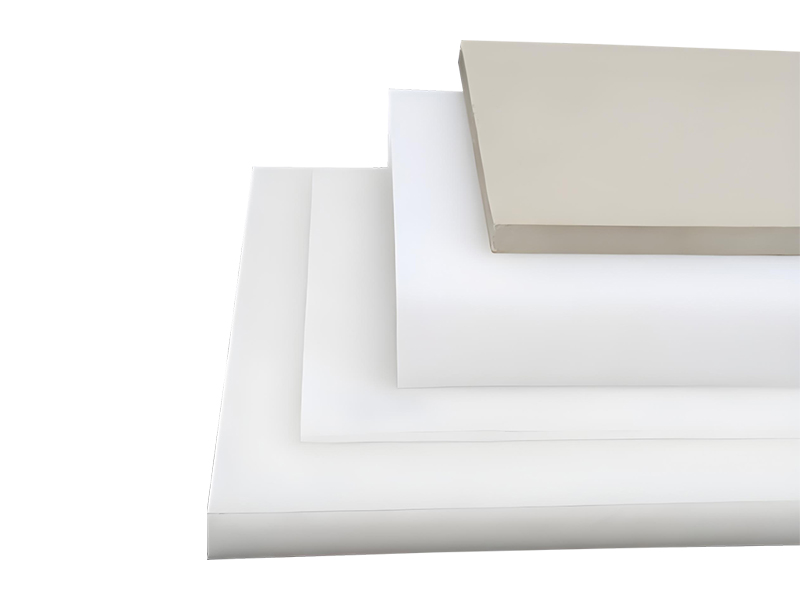 Natural Polypropylene Sheet for Visual Inspection and General FabricationTranslucent natural PP sheet supports visual checks and general engineering use; available in standard sheet formats and finishes for fabrication.View Product →
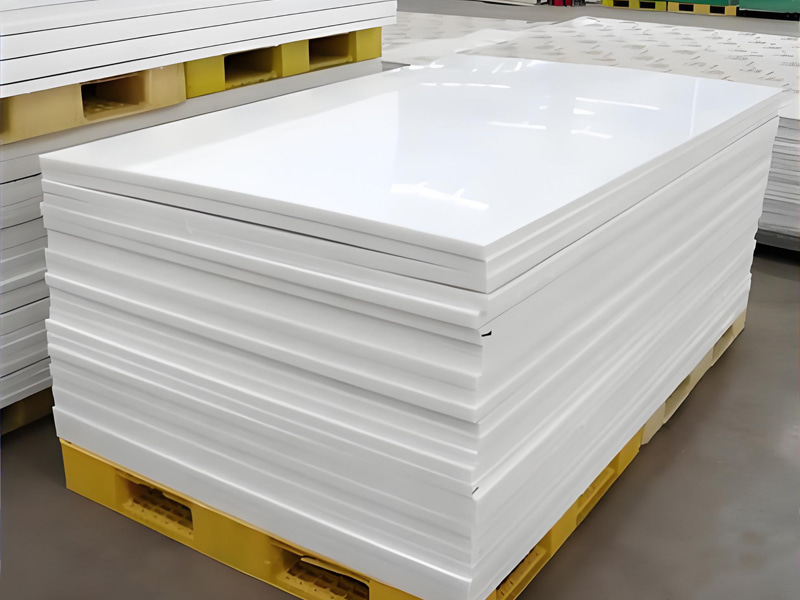 Colored Polypropylene Sheet for Identification, Durability, and FabricationColored PP sheet combines durable polypropylene with visual identification; suited to containers, signage, and fabricated parts requiring color stability.View Product →
Sheet format is the third lever. Full sheets make sense when you have in-house cutting; cut-to-size blanks reduce scrap but add lead time. Our own production runs both natural and coloured standard PP sheet, and the standard PP sheet range covers the sizes and finishes most fabricators ask for.
Pigment changes colour, not chemistry. If the part touches food or potable water, ask for the colorant declaration as well as the resin declaration, because they are separate documents and buyers frequently hold only one of them.
Frequently Asked Questions
What thickness does a standard PP sheet come in?
Most mills quote standard PP from about 1 mm to 30 mm, with thicker sections made to order. Anything under 3 mm is often supplied as thin panel or roll, and anything over 20 mm usually needs a flatness clause because cooling stresses are harder to control.
Is standard PP sheet food safe?
Only when the specific resin and colorant carry food-contact declarations. Natural grades are the easiest to document because no pigment is involved, but the compliance comes from the certificate, not from the colour of the sheet.
Can standard PP sheet be welded?
Yes. Hot gas welding with PP filler rod, butt fusion and extrusion welding all work well, and joint strength can approach that of the parent sheet. Surfaces should be scraped or cleaned first, since the low surface energy that makes PP chemically useful also makes it hard to bond.
Will standard PP sheet survive outdoors?
Not in direct sun without a UV package. Unstabilized PP chalks and loses impact strength within a couple of seasons. If the part is permanently outdoors, specify UV-stabilized sheet and allow for a slightly different colour drift over time.
Related products
-
-
Natural PP Sheet (Polypropylene) is renowned for being lightweight with high toughness and heat resistance, widely used in industrial pipe connections, aquaculture tanks, and laboratory equipment. It ...
-
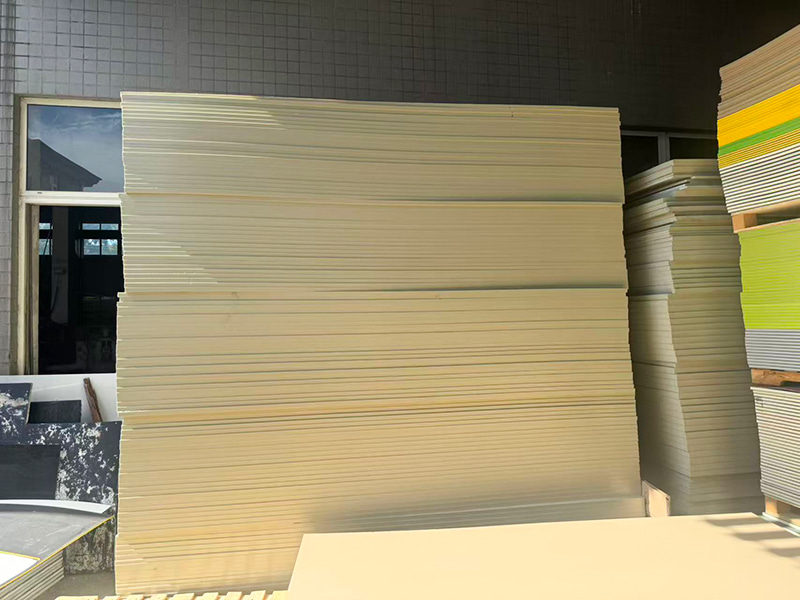
Industrial-Grade PPH High-Strength Corrosion-Resistant Plastic Sheet is produced from polypropylene homopolymer (PPH) resin, offering excellent mechanical strength combined with outstanding resistance...
-
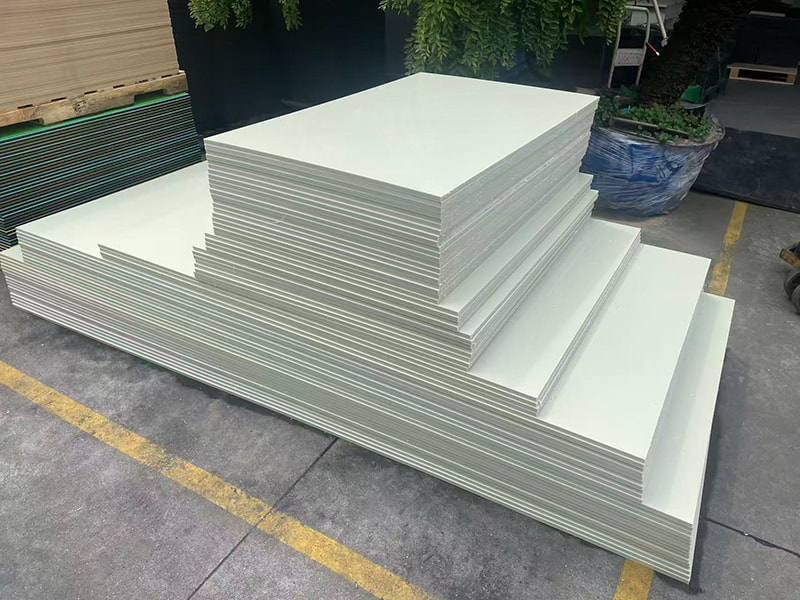
Eco-Friendly Non-Toxic Multi-Purpose PPH Engineering Plastic Sheet is produced from polypropylene homopolymer (PPH) resin that is inherently environmentally friendly and non-toxic, free of heavy metal...
-
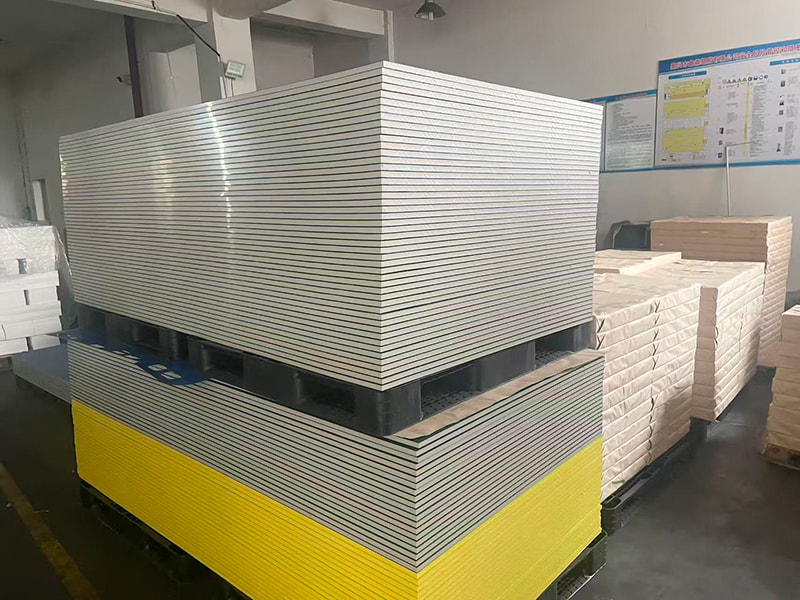
Outdoor engineering HDPE two-tone sandwich sheet is built from two layers of HDPE in contrasting colors fused into a single sandwich structure, with a distinct surface tone over a differently colored ...
Get In Touch
If you have any questions regarding, feel free to contact us at any time
-
 justin@xinsenplastic.com
-
 +86-13586463708
-
 Shenglong Industrial Park, Wangdian Town, Xiuzhou District, Jiaxing City, Zhejiang Province
Copyright © Jiaxing Xinsen Plastic Co., Ltd.
All Rights Reserved.
Plastic Sheets Manufacturers in China
