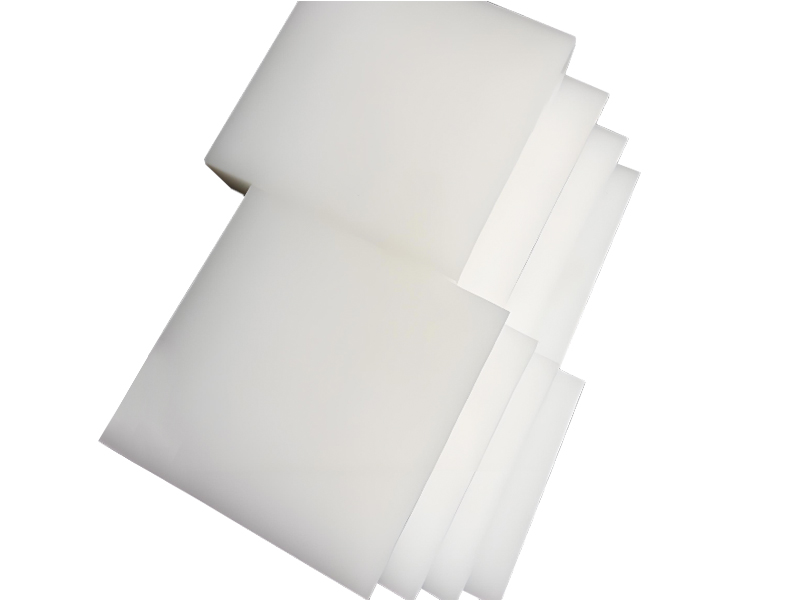
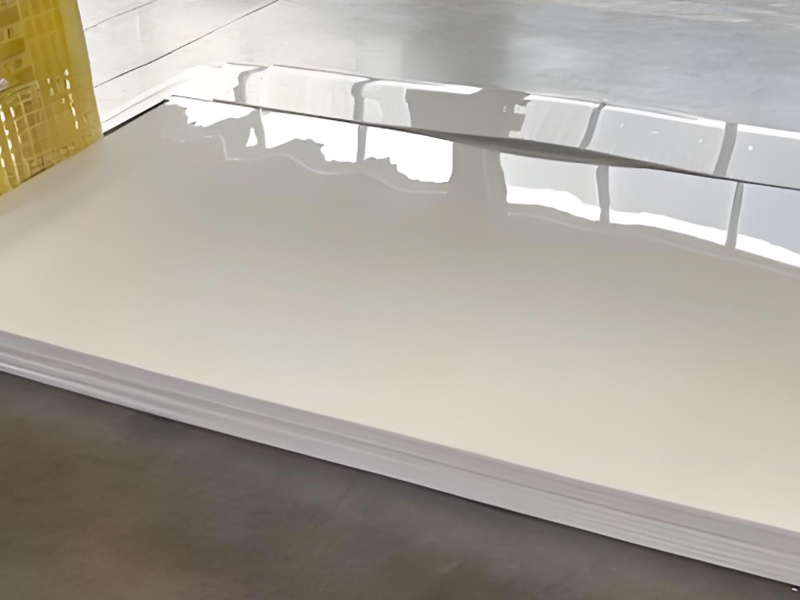
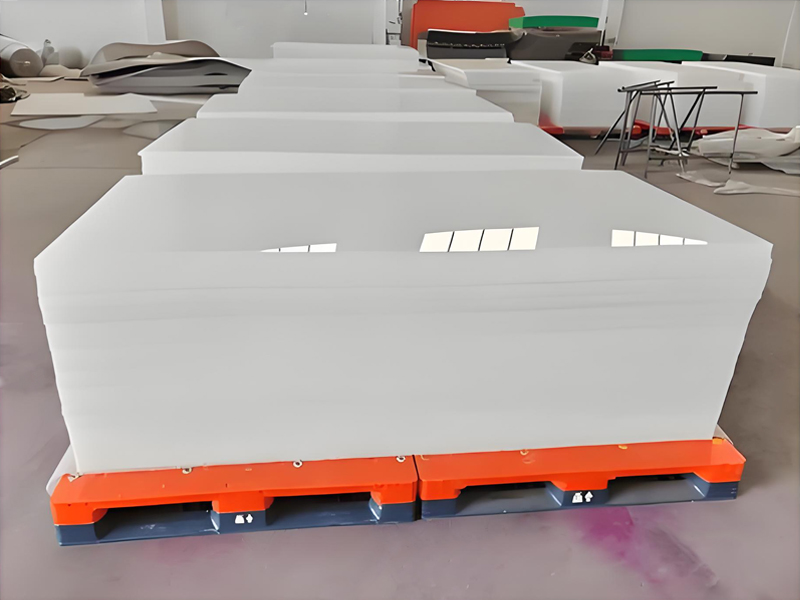
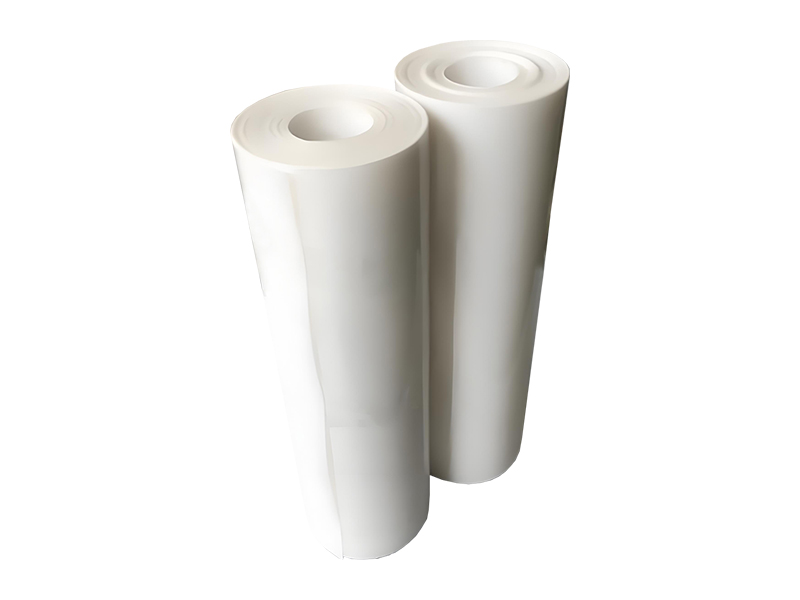
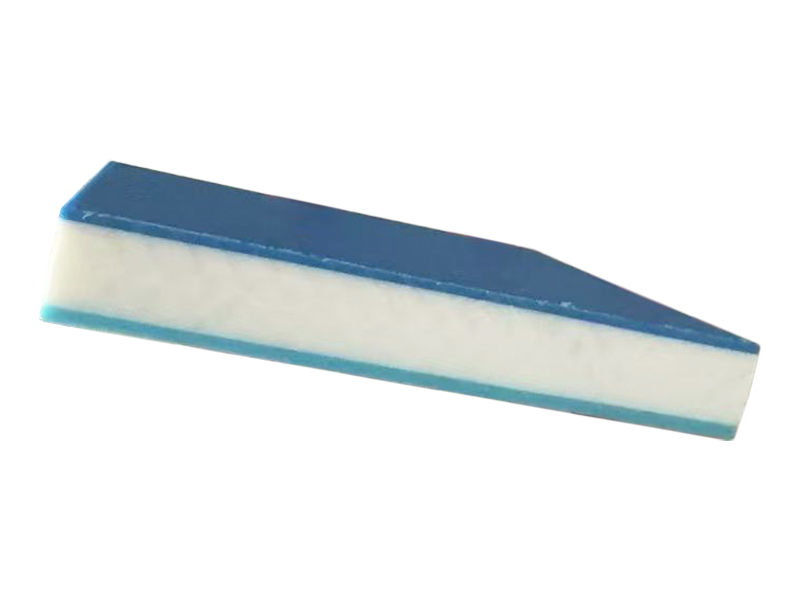
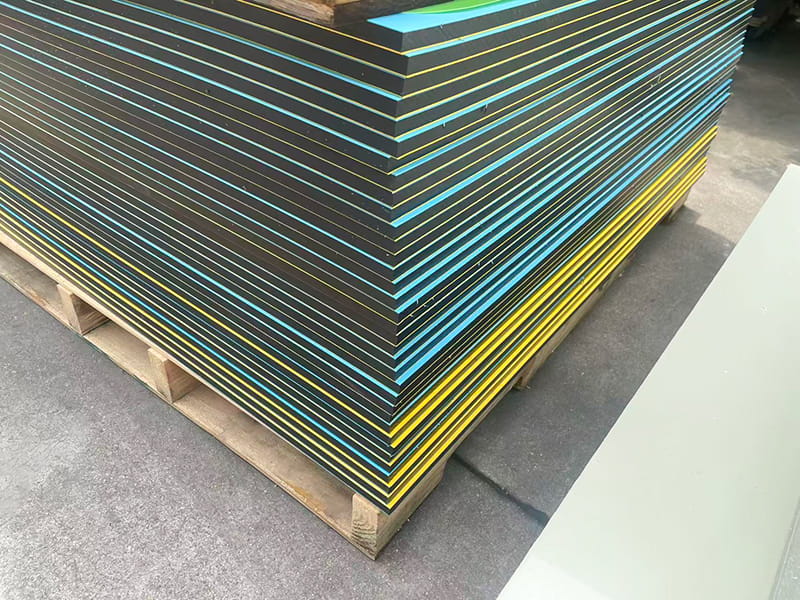
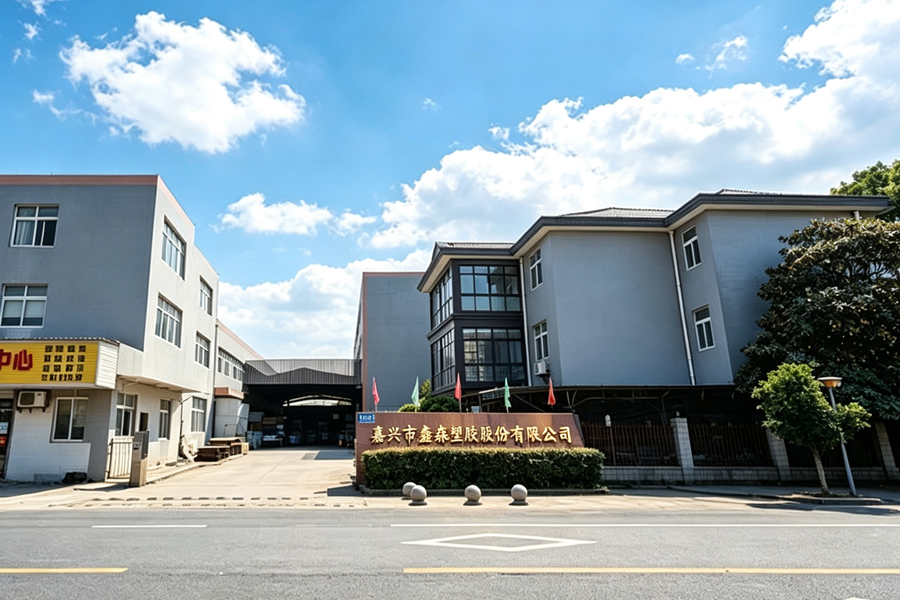
Jiaxing Xinsen Plastic Co., Ltd. is a PE Sheet manufacturer producing polyethylene sheets at our Jiaxing plant in Zhejiang Province since October 2001. Our range covers HDPE and LDPE in monocolor, natural, two-tone sandwich and tri-color sandwich constructions, with smooth, orange-peel and frosted surface finishes. Sheet from this range runs into playground and amusement equipment, outdoor furniture and signage, food processing surfaces, marine and industrial protection panels, aquaculture tanks, industrial buckets and general fabrication.
Production is organized around custom orders rather than a fixed catalogue. We develop sheet against customer drawings or samples, including two-colour and three-colour builds and single- or double-sided textured HDPE, so material, thickness, colour, surface and sheet size are matched to the application instead of being adapted from the nearest stock size.
PE Sheet Range and Where Each Product Fits
The PE Sheets family divides into two material groups, HDPE and LDPE, with several constructions inside each group. HDPE carries the higher rigidity, load-bearing behaviour and outdoor durability; LDPE is softer and more flexible, and suits parts where cushioning or pliability matters more than stiffness.
- HDPE Sheets — monocolor, natural, two-tone sandwich and tri-color sandwich versions for playground equipment, outdoor furniture, signage, marine fittings, food-contact surfaces and industrial protection panels.
- LDPE Sheets — monocolor and natural low-density sheet for flexible impact parts, protective components, liners and cushioning where a softer, more pliable sheet is required.
| Product |
Construction |
Typical application fit |
What we configure |
| HDPE Monocolor Sheet |
Single-colour HDPE, one solid tone through the sheet |
Playground panels, outdoor furniture, signage, cutting boards, industrial protection |
Colour, thickness, sheet size, single- or double-sided texture |
| Natural HDPE Sheet |
Unpigmented HDPE |
Kitchen cutting boards, food processing countertops, slaughterhouse pads, medical instrument pads |
Grade, surface finish, thickness, dimensional tolerance |
| HDPE Two-Tone Sandwich Sheet |
Co-extruded HDPE with contrasting surface and core colours |
CNC-engraved signage, playground panels, outdoor engineering components |
Colour pair, skin layer thickness, engraving depth allowance |
| HDPE Tri-Color Sandwich Sheet |
Three-layer co-extruded HDPE |
Amusement facilities, marine anti-corrosion panels, industrial cladding |
Layer colour sequence, panel build, UV performance grade |
| LDPE Sheet |
Low-density polyethylene, monocolor or natural |
Flexible impact parts, liners, protective and cushioning components |
Colour, thickness, flexibility, sheet dimensions |
| Textured HDPE Sheet |
HDPE with orange-peel or frosted pattern |
Anti-slip surfaces, cladding, decking, decorative panels |
Pattern type, one- or two-sided texture, sheet size |
HDPE or LDPE: How We Match the Material to the Job
Both materials are polyethylene and share chemical inertness, moisture resistance, electrical insulation and non-toxic behaviour, but they answer different mechanical demands. We confirm the working point of the part before recommending a grade, because rigidity, impact response and long-term outdoor behaviour drive the decision more than colour or finish.
- Load and stiffness: HDPE holds shape under sustained load and is the usual choice for structural panels, playground decks, tanks and cladding.
- Impact and flexibility: LDPE absorbs impact and flexes without cracking, which suits cushioning, protective edges and parts that must bend in service.
- Outdoor exposure: HDPE sheet with UV stabilisation resists sun, rain, snow and temperature swings without the fading, warping and cracking typical of timber.
- Chemical and marine contact: Both materials resist acids, alkalis and salt spray; HDPE is commonly specified for marine accessories and industrial protection where seawater contact is continuous.
- Food-contact surfaces: Natural, non-pigmented HDPE is our base material for cutting boards and processing pads, with grade confirmed against the intended contact use.
Application Fit Across the Range
The same sheet family serves very different sectors, and the sheet build changes with the environment. Outdoor amusement and play equipment needs impact resistance plus UV stability; signage and play panels need a colour contrast that survives CNC engraving; food and medical surfaces need an unpigmented, easy-clean sheet.
- Playground and amusement equipment — slides, climbing frames, safety fences, rockers, modular play systems and indoor interactive wall toys.
- Outdoor furniture and signage — park furniture, leisure facilities, wayfinding signs, advertising displays and municipal amenity panels.
- Food processing — kitchen cutting boards, processing countertops, cutting pads and conveyor components in non-toxic, odourless, non-absorbent sheet.
- Marine and industrial — anti-corrosion sandwich panels, dock and vessel fittings, tank linings and protective cladding exposed to salt spray.
- Tanks, buckets and aquaculture — large water tanks, industrial buckets and fish-farm components where toughness and chemical resistance combine.
- Power and medical infrastructure — insulated concealed components and instrument pads where stable electrical insulation and clean surfaces are required.
Critical Specifications We Confirm Before Production
Sheet is quoted against a defined specification, not a general description. We review the following points with the drawing or sample in hand and confirm them in writing before extrusion begins.
- Length, width and thickness, plus the tolerance the downstream process can accept
- Material grade, density target and whether UV stabilisation is required
- Colour reference, and for sandwich sheet the exact colour sequence and skin thickness
- Surface state — smooth, orange-peel or frosted, on one face or both
- Food-contact or clean-surface requirement where the sheet touches product
- Fabrication method at your end, since engraving, welding and bending impose different demands on layer build
- Quantity per size, packing method and destination port
Configuration Options and Custom Development
Custom production is our core business, not an add-on. We support drawing-based processing and sample production across materials, sizes and surface finishes, and we develop two-colour and three-colour sheet as well as single-sided and double-sided textured HDPE to suit different product designs.
Typical configuration variables we build into a run include material grade, colour structure, layer sequence, sheet thickness and dimension, surface pattern, edge condition and packing format. Where a customer supplies a sample rather than a drawing, we reproduce colour, texture and layer build from that reference and confirm the result before volume production.
Manufacturing Process and Quality Control
Our plant works with three production processes — three-layer co-extrusion, orange-peel pattern and frosted or smooth surface finishing — supported by four modern, energy-saving production lines with an annual capacity of more than 20,000 tons. The team includes four industry experts and more than twenty professional technical staff, which allows us to hold process settings stable across repeat orders.
Quality control is applied through the whole process: inspection follows each production stage, and finished sheet is checked to the order specification and the applicable standard before packing. Sheet is verified for thickness, dimensions, colour consistency, surface condition and layer structure, and the same inspection routine is used for repeat runs so the second delivery matches the first.
Information We Use to Configure Your Solution
| Project input |
What it determines |
| End application and service environment |
Material choice, UV stabilisation, colour structure |
| Sheet drawing: thickness, length, width, tolerance |
Extrusion setup, sheet build, cutting plan and packing |
| Colour and layer requirement |
Single, two-tone or tri-color co-extrusion sequence and skin thickness |
| Surface texture preference |
Smooth, orange-peel or frosted tooling, applied to one or both faces |
| Downstream fabrication method |
Layer build, flatness and thickness allowance for CNC engraving, welding or bending |
| Order volume and delivery schedule |
Run planning across four lines and production sequencing |
| Destination port and packing requirement |
Protection, pallet or bundle format and container loading plan |
Installation, Fabrication and Maintenance
Polyethylene plastic sheet is fabricated with standard woodworking and plastic-working methods — sawing, routing, milling, drilling and hot-air or extrusion welding. Because the material moves with temperature, we advise leaving clearance at fixing points and using slotted or oversized holes where large panels are mounted outdoors.
- Cut and machine with sharp tooling and a controlled feed rate to keep edges clean
- Support panels evenly in service so loads stay distributed across the sheet
- Clean with mild detergent and water; avoid aggressive solvents that attack the surface
- Panel sections are replaceable individually, which keeps playgrounds, tanks and cladding serviceable over long periods
- Store flat, out of direct sun, before installation to avoid unnecessary distortion
Order Support, Sampling and Export Delivery
Our engineering team develops sheet from drawings or samples and can produce sample sheet for approval before a volume run. An in-house international sales department handles the process from production through export documentation, so technical questions and shipment questions are answered by the same team.
The plant sits in Jiaxing within the Yangtze River Delta, roughly two hours by road from Shanghai Port and Ningbo Port. Sea freight is our standard channel for sheet orders, with air freight arranged through Ningbo or Shanghai airports when a project schedule requires it. Our sheet is already supplied across mainland China, Hong Kong, Macao and Taiwan, and exported to North America, South America, Europe, Southeast Asia and Southern Africa.
Frequently Asked Questions
Which PE sheet should be used outdoors?
HDPE with UV stabilisation is our standard recommendation for continuous outdoor service. Monocolor HDPE, two-tone and tri-color sandwich sheet all hold their appearance through sun, rain and temperature cycling, and resist the fading, warping and cracking associated with timber.
Can you produce two-colour and three-colour sheet?
Yes. We co-extrude contrasting layers so the core colour shows through CNC engraving, producing permanent patterns and lettering without paint or print. The colour pair, layer sequence and skin thickness are set from your design.
Do you supply sheet for food-contact and medical surfaces?
Natural HDPE is produced for cutting boards, processing countertops and instrument pads, where a non-toxic, odourless, non-absorbent and easy-clean surface is needed. The grade and surface requirement are confirmed against the specific contact application on each order.
What information do you need to quote a PE sheet order?
A drawing or physical sample, the end application, required thickness and sheet dimensions, colour and layer structure, surface texture, order quantity and destination port. With those points confirmed we can propose the material grade, production route and packing format.
What production capacity do you have?
Four energy-saving production lines give us an annual capacity of more than 20,000 tons, supported by four industry experts and over twenty technical staff. That capacity covers both repeat standard sizes and fully customized runs.



 English
 Español