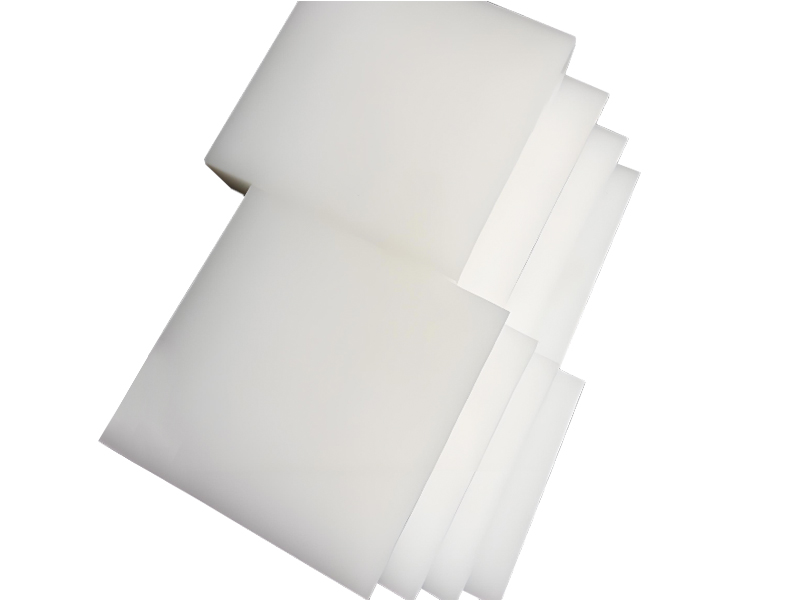
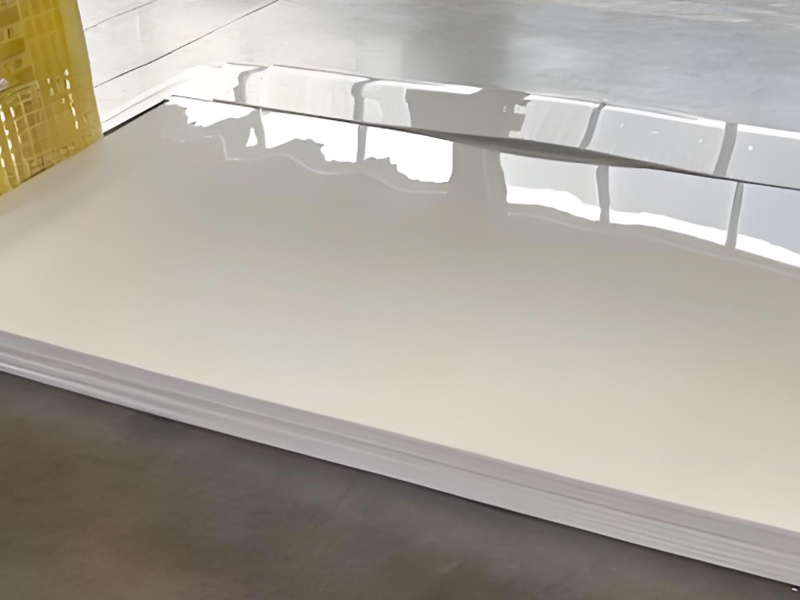
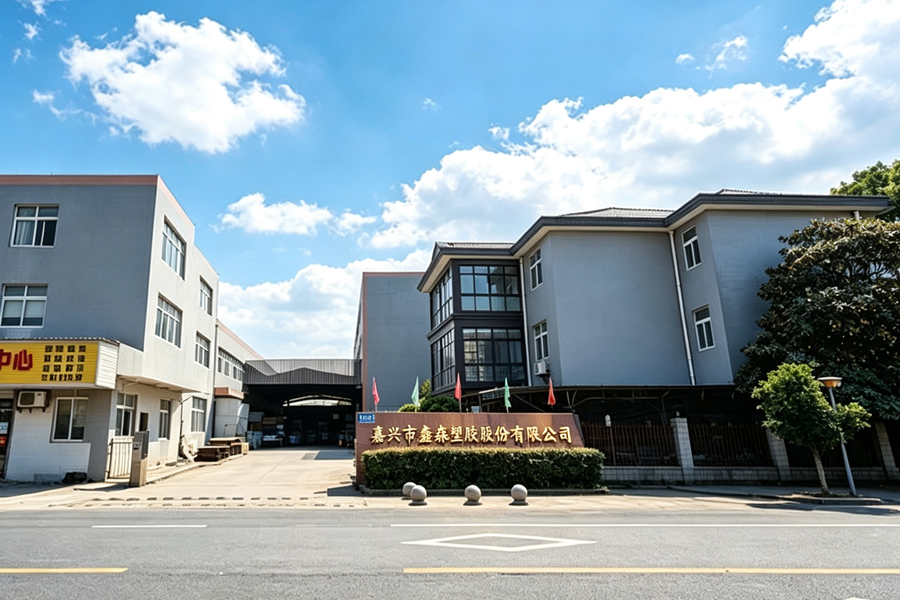
Jiaxing Xinsen Plastic Co., Ltd. is a Natural HDPE Sheet manufacturer based in Jiaxing, Zhejiang Province, China, producing high-density polyethylene sheet from our own plant in the Yangtze River Delta. Natural HDPE sheet is the unpigmented, high-purity grade of our HDPE range: it carries the rigidity and toughness balance of HDPE without added colour, and it is the grade we supply where direct food contact, cleanliness, chemical exposure or weldability drives the specification.
Our sheet output is custom production. Thickness, sheet size, surface texture, edge preparation and fabrication scope are set against the drawing or sample you provide, so the sheet arrives matched to the part rather than trimmed on site.
Natural HDPE Sheet and the PE Range We Supply
We run PP and PE sheet production on four modern lines with a total annual capacity above 20,000 tons, covering three-layer co-extrusion, orange-peel texture, smooth surface and matte finish processes. Natural HDPE sheet sits inside a broader PE and PP family, and the grade we recommend depends on contact conditions, colour requirement and fabrication route.
- Natural HDPE Sheet — unpigmented, food-grade compliant, weldable and thermoformable; cutting boards, instrument pads, industrial connectors and machined components.
- HDPE monocolor sheet — solid pigmented HDPE for outdoor furniture, playground equipment and waterproof outdoor panels.
- HDPE two-tone and tri-color sandwich sheet — co-extruded colour layers with the core exposed on routed edges, used in signage, children's products and amusement facilities.
- LDPE sheet — softer, more flexible polyethylene where impact damping outweighs stiffness.
- PP and PPH sheet — higher stiffness, heat resistance and chemical resistance for tanks, liners and industrial components.
The natural grade is also the base we modify when texture, thickness or cut-to-size geometry is the controlling variable. Our HDPE Sheets range shows the full family, and PE Sheet covers the polyethylene materials we extrude.
Application Fit
| Application |
Sheet Form We Supply |
Why Natural HDPE Fits |
Details to Confirm |
| Kitchen cutting boards |
Natural HDPE sheet, food-grade |
Non-porous surface, easy to clean, no odour or colour transfer |
Thickness, board size, edge profile, texture |
| Medical instrument pads |
Clean-grade natural HDPE pad |
Chemically inert, low moisture uptake, resists repeated cleaning |
Cleaning chemistry, flatness, edge finish |
| Industrial connectors and machined parts |
Plate and machined blanks |
Rigidity and toughness balance, stable electrical insulation |
Machining allowance, hole and thread details, tolerance class |
| Chemical and water-contact panels |
Welded fabricated sheet |
Acid, alkali and corrosion resistance; weldable joints |
Joint design, weld process, sheet thickness |
| Cold-climate outdoor components |
Extruded sheet, natural or textured |
Low-temperature impact resistance and weather resistance |
Service temperature, UV exposure, fixing method |
Material Characteristics and Critical Specifications
Natural HDPE balances stiffness with toughness, so a sheet can carry structural load and still absorb impact at low temperature. Because no pigment is added, the sheet keeps a translucent natural tone and a consistent core, which matters where the material may come into contact with food or where welded joints must match the base sheet.
- Acid, alkali and corrosion resistance for washdown and chemical environments
- Weather resistance for exposed outdoor components
- Stable electrical insulation for low-voltage and insulating parts
- Eco-friendly, non-toxic composition with food-grade compliance for direct contact
- Good machinability, plus supported welding and thermoforming for fabricated assemblies
- Low water absorption and easy cleaning across repeated use cycles
Thickness, thickness tolerance, sheet dimensions and flatness are the specifications that decide whether a sheet machines cleanly or needs rework. We set these values per order against your drawing, and we keep the confirmation in writing before extrusion.
Surface, Colour and Fabrication Configuration
Surface finish
Natural HDPE sheet can be supplied with a smooth surface, a matte finish, or a single-sided or double-sided orange-peel texture. Textured faces reduce glare and surface marking on working surfaces such as cutting boards and equipment pads.
Colour and layering
The natural grade stays unpigmented. Where colour is required, our co-extrusion process produces two-tone and tri-color sandwich sheet with contrasting faces and a visible core, as used in HDPE Two-Tone sandwich Sheet for playground, furniture and marine applications.
Fabrication scope
We process to drawing or sample, including cut-to-size panels, drilled and profiled blanks, radiused edges and weld-prep bevels. Sampling is available before series production so that geometry, surface and colour are agreed on a physical part.
Quality Control and Acceptance
Full-process quality management covers every stage of sheet production, with inspection after each process step and a 100% finished-product check against customer requirements and international standards. We hold a complete set of testing equipment in-house for thickness, dimension and surface verification.
- Incoming material and formulation check before extrusion
- In-process inspection of thickness, width and surface after each operation
- Finished-goods inspection to the agreed drawing, including flatness and edge quality
- Sampling sign-off where the drawing is new or the surface is critical
- Quality tracking after delivery with prompt handling of any objection
Information We Use to Configure Your Solution
| Project Input |
What We Need From You |
How It Shapes the Configuration |
| Application and contact conditions |
End use, food contact, chemicals, cleaning agents, service temperature |
Confirms natural HDPE as the correct grade or points to a modified material |
| Geometry |
Drawing or sample, sheet size, thickness, quantity |
Sets extrusion width, cut plan and nesting |
| Tolerance and flatness |
Thickness tolerance, dimensional class, flatness limit |
Determines line settings and inspection criteria |
| Surface and colour |
Smooth, matte or textured; natural, pigmented or layered |
Selects finish rolls, texture depth and co-extrusion structure |
| Fabrication and assembly |
Edges, holes, weld prep, thermoforming or welding procedure |
Adds machining steps and packing protection |
| Delivery |
Destination, packing requirement, trade terms, documentation |
Fixes pallet format, protection film and shipping method |
Fabrication, Installation and Maintenance
Natural HDPE machines with standard woodworking and CNC tooling at moderate feed rates, and it can be welded and thermoformed for tanks, liners and ducting. Sheets are stored flat on a level surface away from direct heat before machining so that flatness is preserved during cutting.
Cutting boards and pads are cleaned with standard food-area detergents rather than abrasive or strongly solvent-based cleaners, which keeps the surface intact. Fabricated assemblies should be supported along their full length during installation to limit long-term creep under load.
Documentation, Packaging and Delivery
Orders ship from our plant two hours by road from Shanghai Port and Ningbo Port, which keeps sea freight straightforward and allows air freight through either airport when a schedule demands it. Sheet is packed with protective film and edge protection, then palletised or crated according to the agreed format.
Delivery scope is confirmed at quotation and includes dimensional records and inspection documentation where requested. We also supply guidance on storage, machining parameters and cleaning practice for the specific sheet supplied.
Frequently Asked Questions
What thicknesses and sheet sizes can you produce in natural HDPE?
Thickness and sheet dimensions are produced to your drawing rather than from a fixed stock list, because the natural grade is used across cutting boards, instrument pads and machined industrial parts with very different geometry. Send the part drawing or a physical sample and we confirm thickness, sheet size and tolerance before production.
Is natural HDPE sheet suitable for direct food contact?
Yes. Natural HDPE is supplied as a food-grade compliant, non-toxic material with a non-porous surface, which is why it is widely used for kitchen cutting boards. It does not transfer taste or odour and cleans down easily between uses.
Can you supply cut-to-size panels or machined parts instead of full sheets?
We process to drawing and sample, including cut-to-size panels, drilled blanks, radiused edges and weld-prep bevels. Complex parts can be sampled first so that geometry and surface are agreed before the production run.
Can natural HDPE sheet be welded or thermoformed?
Both are supported. Natural HDPE has good processability and welds cleanly to matching natural sheet, with the joint colour blending into the base material. Thermoforming is used for covers, liners and shaped components.
How do you control thickness tolerance and flatness?
Thickness is monitored in process on the extrusion line and again at finished-goods inspection, with 100% final checking against the agreed requirements and international standards. Flatness limits are set per order and inspected on the finished sheet before packing.
What production capacity supports larger projects?
Our four energy-efficient production lines run at over 20,000 tons of annual capacity, backed by a technical team of more than 20 specialists. That capacity supports repeat orders and staged deliveries against a single agreed specification.



 English
 Español