

 English
 Español
Outdoor engineering HDPE two-tone sandwich sheet is built from two layers of HDPE in contrasting colors fused into a single sandwich structure, with a distinct surface tone over a differently colored ...


News
Home / News / Industry News / Polyethylene Plastic Sheet Guide: HDPE vs LDPE, Thickness and Selection
Polyethylene Plastic Sheet Guide: HDPE vs LDPE, Thickness and Selection
2026-09-23
Content
Specifying a polyethylene plastic sheet comes down to three numbers: density, thickness, and surface finish. Get the combination wrong and the panel that arrives on site will bow between fasteners, crack at the bolt holes, or fail a food-contact check on first inspection.
What a Polyethylene Plastic Sheet Really Is
A polyethylene plastic sheet is a thermoplastic panel formed by extruding ethylene polymer into a flat gauge, usually between 0.5 mm and 50 mm, then cooling and trimming it to a standard sheet size.
Definition: a polyethylene plastic sheet is a flat thermoplastic panel extruded from ethylene polymer and classified by density. LDPE sits between 0.910 and 0.925 g/cm3, HDPE between 0.941 and 0.965 g/cm3, and that gap drives stiffness, chemical resistance, weldability, and low-temperature behavior.
The difference is not academic. A 12 mm LDPE panel deflects under a load that a 12 mm HDPE panel of the same footprint barely notices, and the reverse holds when a part has to flex without whitening at the bend. Projects that need both densities usually order the full polyethylene sheet range from one supplier, because mixed batches show up as color drift and thickness mismatch during assembly.
0.92 g/cm3 LDPE density midpoint
0.96 g/cm3 HDPE density midpoint
0.5 to 50 mm Typical extruded gauge
Most specification errors happen right here: teams choose by color or thickness because those are the visible variables, then discover the grade underneath cannot hold a thread insert or survive a chemical wash-down.
HDPE vs LDPE: Picking the Right Density
Choose HDPE when the sheet must hold shape under load, take a thread, or resist chemicals; choose LDPE when the part has to flex, absorb impact, or be heat-sealed.
The numbers behind that rule are wide. HDPE sheet typically reaches 25 to 30 MPa tensile strength at yield with a flexural modulus near 1.0 to 1.4 GPa. LDPE lands at roughly 8 to 12 MPa and 0.2 to 0.3 GPa. Specifying the wrong side of that gap forces thicker material to compensate, which usually costs more than the density difference itself.
HDPE sheet strengths
- Accepts machine screws without backing inserts
- Stays flat in 12 mm and heavier gauges
- Resists acids, alkalis, and wash-down chemicals
- Machines cleanly without gumming the cutter
LDPE sheet strengths
- Bends around corners without stress whitening
- Absorbs impact and stays flexible when cold
- Heat seals into liners and tank membranes
- Cushions parts in trays and dividers
| Property | HDPE sheet | LDPE sheet |
| Density | 0.941 to 0.965 g/cm3 | 0.910 to 0.925 g/cm3 |
| Tensile strength at yield | 25 to 30 MPa | 8 to 12 MPa |
| Flexural stiffness | 1.0 to 1.4 GPa | 0.2 to 0.3 GPa |
| Service temperature | -40 to 80 degrees C | -50 to 70 degrees C |
| Joining method | Butt and extrusion welded | Commonly heat sealed |
For playground panels, cutting boards, and machined fixtures, HDPE is the default because the sheet carries people, tools, or fixtures without creeping.
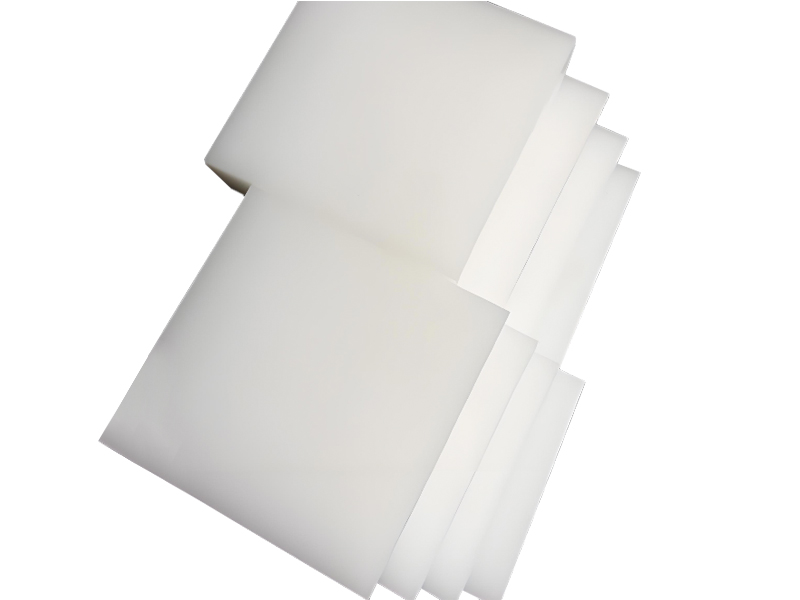 High Density Polyethylene HDPE Sheets Manufacturerskitchen cutting boards Food grade Natural HDPE SheetView Product →
Rule of thumb: if the panel is 12 mm or thicker and carries a load, specify HDPE. If the sheet is under 3 mm and has to bend around a frame, start with LDPE or LLDPE instead.
Thickness, Sheet Size, and Tolerance
Thickness controls stiffness far more than density does, and the tolerance band is the figure most buyers forget to confirm in writing before the order is released.
Standard sheet sizes run 1220 x 2440 mm and 1000 x 2000 mm, with 2000 x 3000 mm panels for large tank and wall work. A thickness tolerance of plus or minus 5 percent is common on extruded PE sheet, and gauges under 6 mm are often held to plus or minus 0.2 mm.
LDPE liner and cover sheet: 0.5 to 3 mm
HDPE general fabrication: 3 to 12 mm
HDPE playground and panel work: 12 to 25 mm
HDPE marine and machined parts: 25 to 50 mm
Thermal movement catches out more installations than thickness does. Polyethylene expands roughly 0.12 to 0.20 mm per meter for every degree of temperature change, so a 2 m panel moving through a 40 degree seasonal swing grows or shrinks by 10 to 16 mm. Slot outdoor bolt holes rather than drilling them to the fastener diameter.
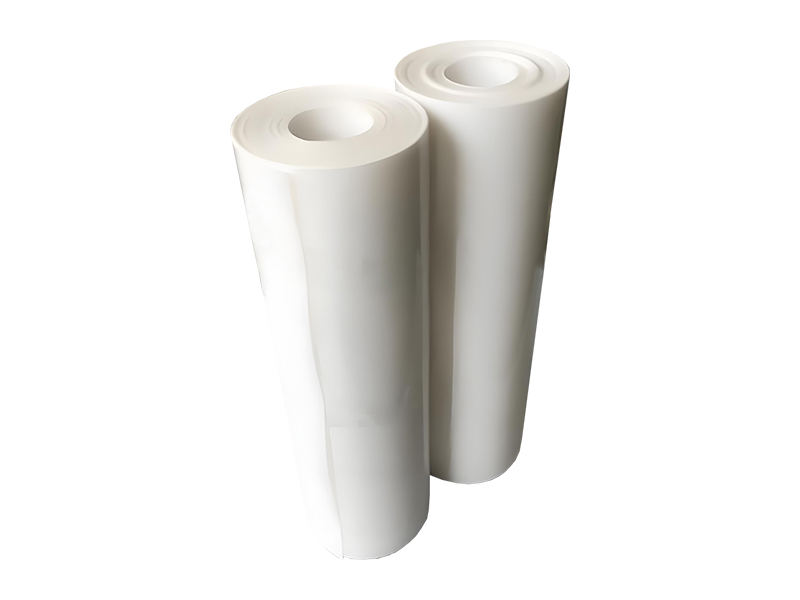 Natural LDPE SheetSpecifications & DescView Product →
Confirm three figures before production starts: nominal thickness with its tolerance band, sheet length and width with squareness limits, and the maximum flatness deviation per meter.
Surface Finish, Color, and Sandwich Construction
Surface finish decides how the sheet wears and how it looks after a year outdoors; sandwich construction decides what the cut edge reveals.
- Smooth gloss face for tanks, liners, and easy-release surfaces
- Orange peel texture for slip resistance on steps and decks
- Matte or frosted face for low-glare cladding and signage
- Single-sided or double-sided texture when one face stays hidden
- Three-layer co-extruded sandwich sheet with a colored core
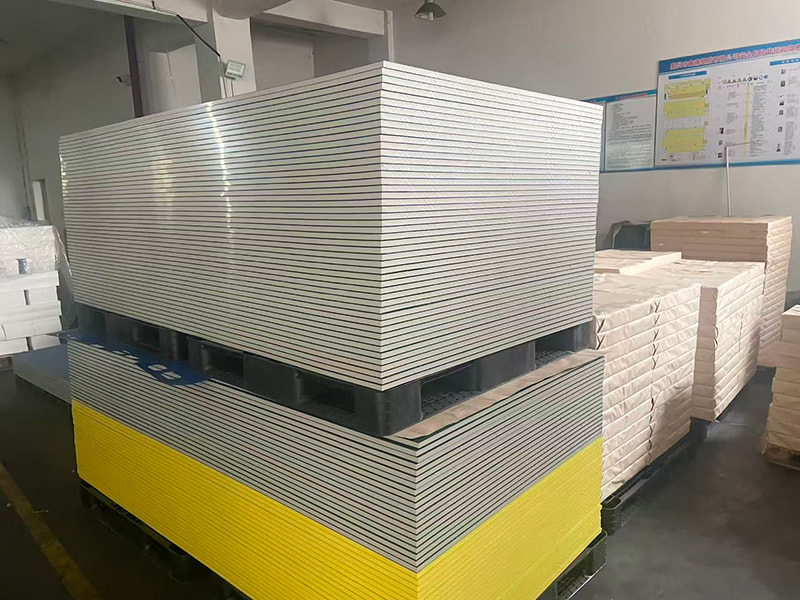
Sandwich sheet solves a specific problem. When a panel is routed or cut to size, a solid colored sheet shows a clean edge while a coated sheet exposes a raw core. Co-extruded three-layer construction keeps the face uniform in color and texture while the core carries the structural job, which is why marine panels and playground boards are frequently specified this way.
Ask for a cut-edge sample, not just a face sample. Surface color match says nothing about how core color, layer thickness, and texture hold up after routing.
Matching Sheet Grade to Application
Start from the working environment rather than the material list, because the environment sets the grade, the texture, and the anti-aging package in that order.
| Application | Grade that fits | Property doing the work |
| Playground panels and slides | HDPE monocolor, 12 to 25 mm | Impact resistance with color through the full thickness |
| Marine and industrial anti-corrosion | HDPE tricolor sandwich | Chemical resistance and a colored core at the cut edge |
| Indoor and outdoor flame retardant | HDPE dual-color sandwich | Reduced flame spread with a decorative face |
| Children's products | HDPE two-tone sandwich | Non-toxic formulation with a soft visual edge |
| Cutting boards and food contact | Natural HDPE, food grade | Non-porous surface that cleans without holding odor |
| Medical instrument pads | Natural HDPE, clean grade | Surface that resists residue between instruments |
Food contact and medical work add a second layer of requirements: the sheet must be non-porous, cleanable, and documented rather than assumed.
kitchen cutting boards Food grade Natural HDPE SheetSpecifications & DescView Product →
Natural, unpigmented HDPE is the usual choice where the sheet touches food, skin, or instruments. Pigments and fillers change surface chemistry, so that difference should be verified rather than accepted.
Fabrication, Sourcing, and Quality Checks
Five checks separate an order that installs cleanly from one that generates a replacement request six weeks later.
- Confirm the load case, not the habit. A panel spanning 600 mm under a static load behaves differently from one struck by a moving part, and that answer decides whether 12 mm or 20 mm is correct.
- Request a cut-edge sample. Verify core color, skin thickness, and texture before the full sheet order is produced.
- Write tolerances into the purchase order. Thickness band, length, width, squareness, and flatness should be documented, not agreed verbally.
- Design for thermal movement. Slot outdoor fastener holes and leave clearance at panel edges so expansion does not buckle the assembly.
- Verify the quality record. A supplier with in-house inspection equipment can show thickness readings and surface checks per batch.
Supply distance matters once a project reaches its second or third order. Working from a production base in the Yangtze River Delta region, with road access to Shanghai and Ningbo ports, keeps container loading and inland delivery on a schedule a remote intermediary rarely matches.
Custom work is where manufacturers and resellers diverge. Two-tone and three-tone sheet, one-sided or two-sided texture, and non-standard sheet dimensions all need tooling and process control upstream, so ask who runs the extrusion line before comparing quotations.
Frequently Asked Questions
What is the difference between HDPE and LDPE sheet?
HDPE is denser at 0.941 to 0.965 g/cm3, which makes it stiff, strong, and suitable for load-bearing panels and machined parts. LDPE sits at 0.910 to 0.925 g/cm3, stays flexible in thin gauges, and is usually chosen for liners, covers, and heat-sealed components.
What thickness of polyethylene sheet is used for playground panels?
Most playground panels run between 12 mm and 25 mm in HDPE. The exact figure depends on the unsupported span and the expected point load, so the span should be defined before the gauge is fixed.
Can polyethylene plastic sheet be welded?
HDPE sheet welds well with butt, hot-gas, and extrusion welding, and prepared joints typically reach 80 to 90 percent of parent material strength. LDPE is joined by heat sealing far more often than by welding.
Is polyethylene sheet food safe?
Natural, unpigmented HDPE is used widely for cutting boards and food contact surfaces because it is non-porous and does not absorb odor. Confirm the specific grade and its documentation with the supplier, because pigment and additive packages differ.
A polyethylene sheet specification is complete when density, gauge with tolerance, finish, and joining method all appear on the same document.
Related products
-
-
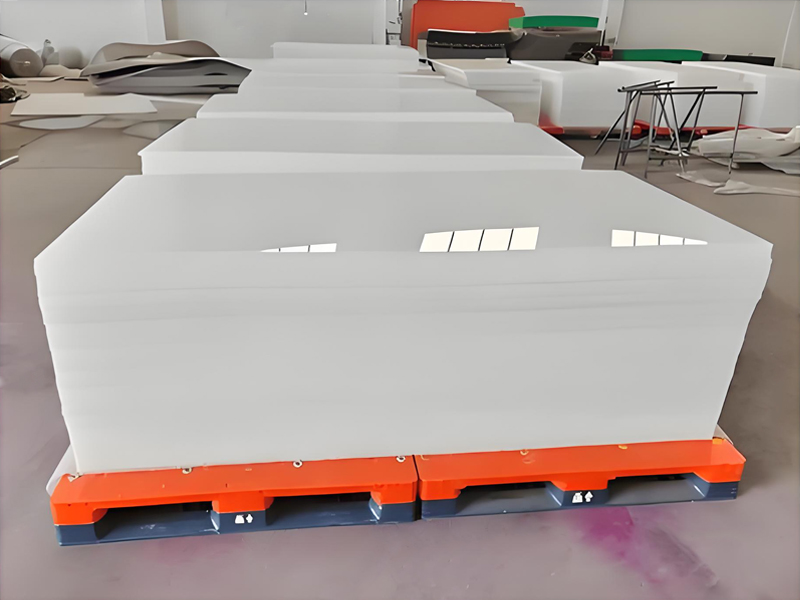
Compared to HDPE, LDPE Monocolor Sheet offers even more prominent flexibility and impact resistance, making it an ideal choice for protective linings and flexible connectors. It is environmentally fri...
-
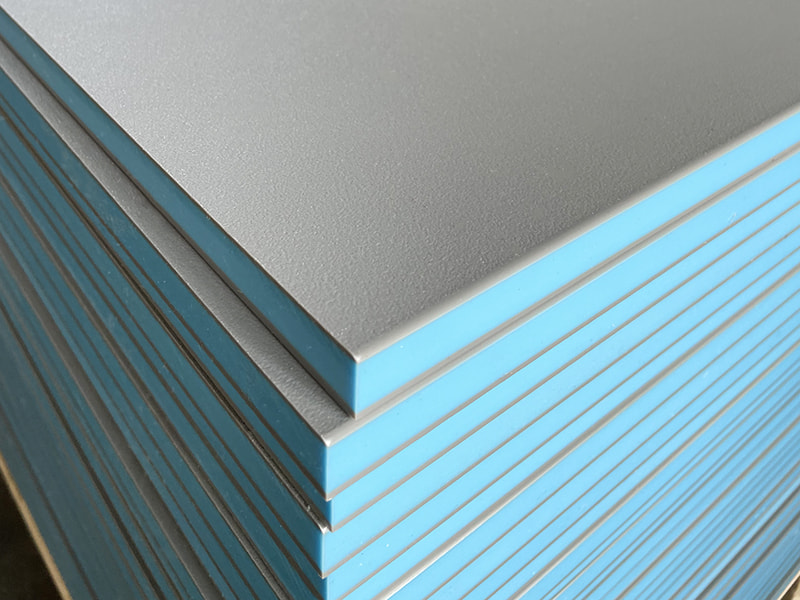
Children's Products Eco-friendly HDPE Two-Tone sandwich sheet is specifically developed for child-related products, combining two layers of contrasting-colored HDPE into a single sandwich structure wi...
-
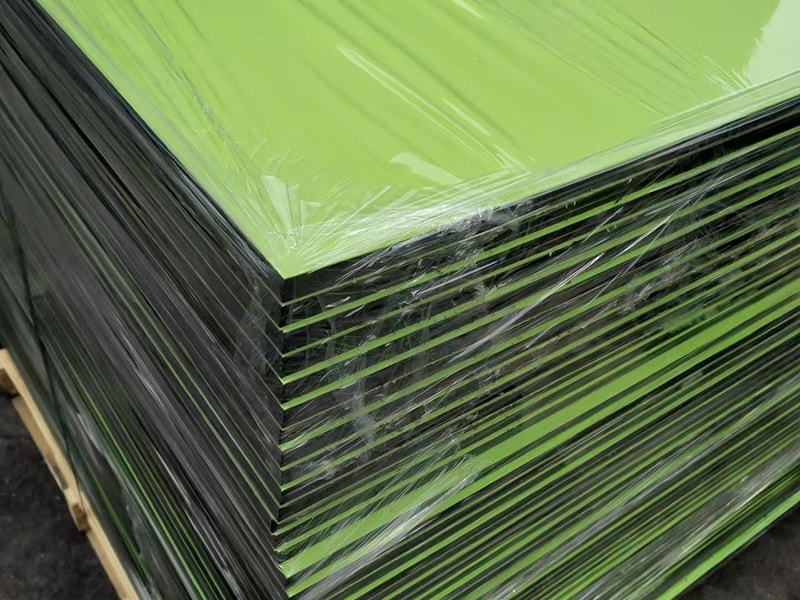
Indoor & Outdoor HDPE Flame-Retardant Dual-Color Sandwich Sheet builds on the standard dual-color sandwich structure by specifically reinforcing fire-retardant performance, allowing it to meet str...
-
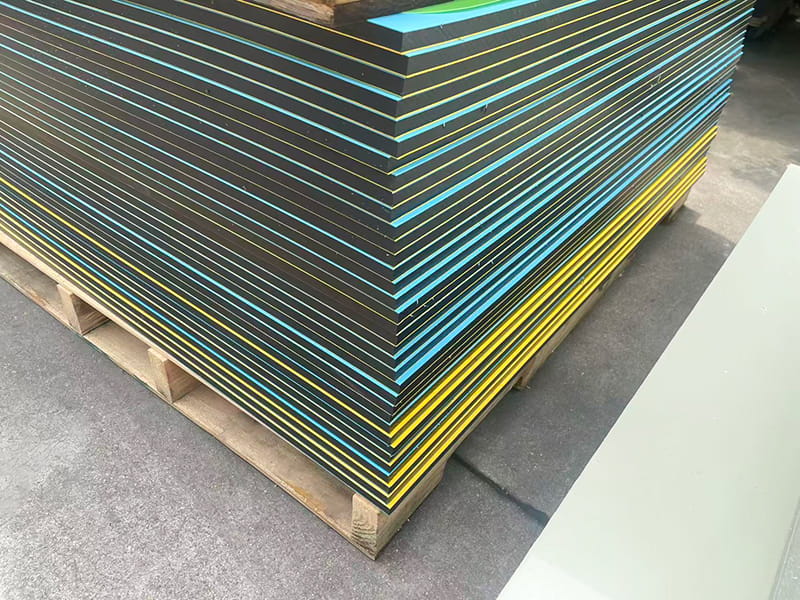
Amusement Facilities Child-Safe HDPE Tri-color sandwich Sheet is built from three layers of differently colored HDPE fused into a single specialized sandwich structure, allowing layered engraving or r...
Get In Touch
If you have any questions regarding, feel free to contact us at any time
-
 justin@xinsenplastic.com
 -
 +86-13586463708
 -
 Shenglong Industrial Park, Wangdian Town, Xiuzhou District, Jiaxing City, Zhejiang Province
Copyright © Jiaxing Xinsen Plastic Co., Ltd.
All Rights Reserved.
Plastic Sheets Manufacturers in China
