

 English
 Español
PP Colored Sheet combines the high fatigue resistance of polypropylene with vibrant visual options, commonly used for turnover boxes, outdoor signage, and automotive parts. It features moderate surfac...


News
Home / News / Industry News / PP Sheets: Standard PP vs PPH Grades, Thickness Tolerances and Sourcing Guide
PP Sheets: Standard PP vs PPH Grades, Thickness Tolerances and Sourcing Guide
2026-09-23
Content
- 1 What PP Sheets Are and Why the Grade Decides Performance
- 2 Standard PP Sheet or PPH Sheet: Choosing the Right Grade
- 3 Sheet Sizes, Thickness and Tolerances That Matter
- 4 Natural, Coloured and Surface-Finished PP Sheet
- 5 Where PP Sheets Earn Their Keep
- 6 Fabrication: Welding, Machining and Thermoforming
- 7 Sourcing PP Sheets Without Surprises
- 8 PP Sheet Questions Buyers Ask
A 2440 x 1220 mm polypropylene panel ordered as 10 mm arrives somewhere between 9.5 mm and 10.5 mm, and on a welded tank that half-millimetre decides how much filler rod the fabricator burns and how flat the finished wall sits.
PP sheet is also one of the few engineering plastics a buyer can specify almost entirely from four numbers: grade, thickness, tolerance and surface. This guide covers what PP sheets are, how standard PP differs from PPH, and how to write a specification that survives contact with a fabrication shop.
What PP Sheets Are and Why the Grade Decides Performance
A PP sheet is a flat polypropylene panel produced by flat-die extrusion or three-layer co-extrusion, normally supplied between 1 mm and 40 mm thick and chosen when chemical resistance, weldability and low moisture absorption matter more than stiffness.
Definition: PP sheet is a thermoplastic sheet made from polypropylene homopolymer or copolymer. Density sits near 0.90 to 0.91 g/cm3, water absorption stays under 0.02 percent, and continuous service temperature is around 90 C for standard grades, higher for PPH.
0.91g/cm3 density, the lightest of the common engineering plastics
0.02percent water absorption, so wet service barely moves dimensions
90degrees Celsius continuous service for standard homopolymer grades
30megapascals typical tensile strength, weldable to itself
Colour is the variable buyers notice first and the one that changes the least. Pigments arrive as masterbatch and leave the polymer backbone alone; molecular weight and crystallinity do not. Two 15 mm sheets that look identical in grey behave very differently after a year under a 50 C caustic load if one is a general purpose homopolymer and the other a higher crystallinity PPH grade.
Melt flow rate is the number worth quoting as a value range rather than a trade name. A lower MFR usually means longer polymer chains, better creep resistance and tougher welds, at the cost of slightly harder thermoforming.
Standard PP Sheet or PPH Sheet: Choosing the Right Grade
Standard PP sheet suits covers, ducts, splash guards and non-critical tanks; PPH sheet uses higher molecular weight, higher crystallinity polypropylene for process vessels, plating lines and wet benches where stiffness has to survive heat and chemical attack at the same time.
Standard PP Sheet
- General purpose homopolymer extrusion
- Easier to thermoform and drape
- Lower cost per kilogram
- Covers, ducts, splash guards, liners
- Continuous service around 90 C
PPH Sheet
- Higher molecular weight and crystallinity
- Better creep resistance under sustained load
- Holds stiffness at elevated temperature
- Process tanks, plating lines, wet benches
- Needs matched welding rod and tighter weld settings
Standard PPPPH
Stiffness
Creep resistance
Heat performance
Weldability
Neither grade is automatically better. A 6 mm standard PP splash guard is a sensible spend, and specifying PPH for it buys nothing. The reverse mistake is running a general purpose homopolymer in a 25 mm tank wall that will hold warm caustic for years, which produces sagging panels and warranty arguments. If the sheet carries load, holds hot chemical or forms a structural wall, PPH is the safer call.
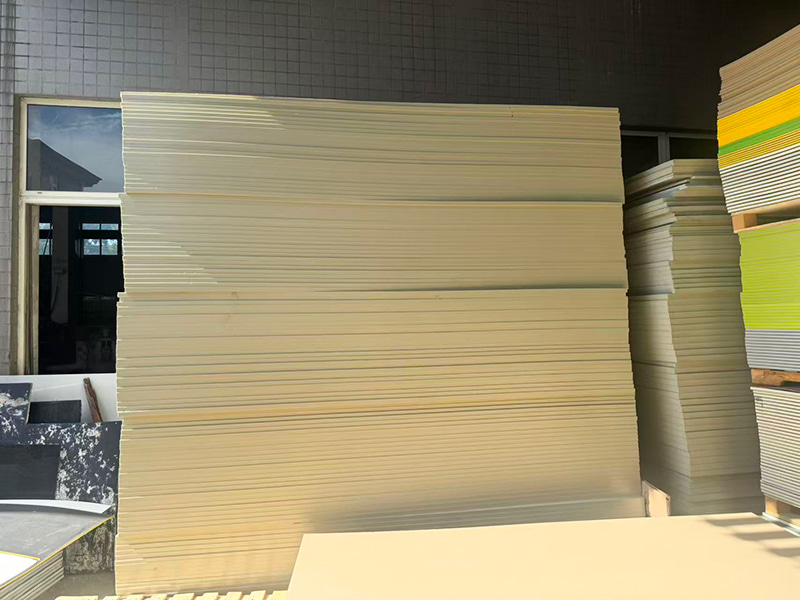 Industrial-Grade PPH High-Strength Corrosion-Resistant Plastic SheetSpecifications & DescView Product →
Sheet Sizes, Thickness and Tolerances That Matter
PP sheet is stocked in 2000 x 1000 mm, 2440 x 1220 mm and 3000 x 1500 mm panels from 1 mm to roughly 40 mm, but thickness tolerance is the line most purchase orders leave blank.
| Thickness band | Working tolerance | Common format | Typical use |
| 1 to 3 mm | plus or minus 0.15 mm | 2000 x 1000 mm | Liners, guards, thermoformed trays |
| 3 to 8 mm | plus or minus 0.3 mm | 2440 x 1220 mm | Tank linings, covers, ductwork |
| 8 to 20 mm | plus or minus 0.5 mm | 2440 x 1220 mm or 3000 x 1500 mm | Process tanks, plating benches |
| 20 to 40 mm | plus or minus 0.8 mm | 2000 x 1000 mm | Structural walls, machined parts |
Tolerance is a labour cost, not paperwork. A 12 mm sheet held at plus or minus 0.5 mm across its width welds predictably. A sheet that drifts 1.2 mm from edge to edge forces the fabricator to machine joints or pack them, and that shop time usually costs more than the difference between a loose and a tight specification.
The range splits the same way at material level: natural PP sheet, coloured PP sheet and PPH engineering sheet, all extruded and cut to order rather than pulled from a fixed stock list. Buyers who want the whole picture can browse the full PP sheet range before fixing a specification.
Natural, Coloured and Surface-Finished PP Sheet
Natural PP sheet is the unpigmented, milky translucent grade, and it is the one to specify when food contact or visual inspection of tank contents matters. Coloured PP sheet is the same polymer carrying a masterbatch, which turns batch-to-batch colour consistency into a specification item rather than an accident.
Surface finish changes more than appearance. Smooth sheet wipes clean and suits food contact; matte and embossed surfaces hide scuffs and add grip on steps and work surfaces; orange-peel texture is common on cover boards. Three-layer co-extrusion lets colour, thickness and surface be combined in one panel instead of bought as separate sheets.
For repeat orders, ask for a colour reference as a physical master sample or a numeric target such as a delta E below 1.0, and state which face carries the finish. A visible gloss difference between two deliveries usually becomes a complaint; a written reference turns it into a measurable check.
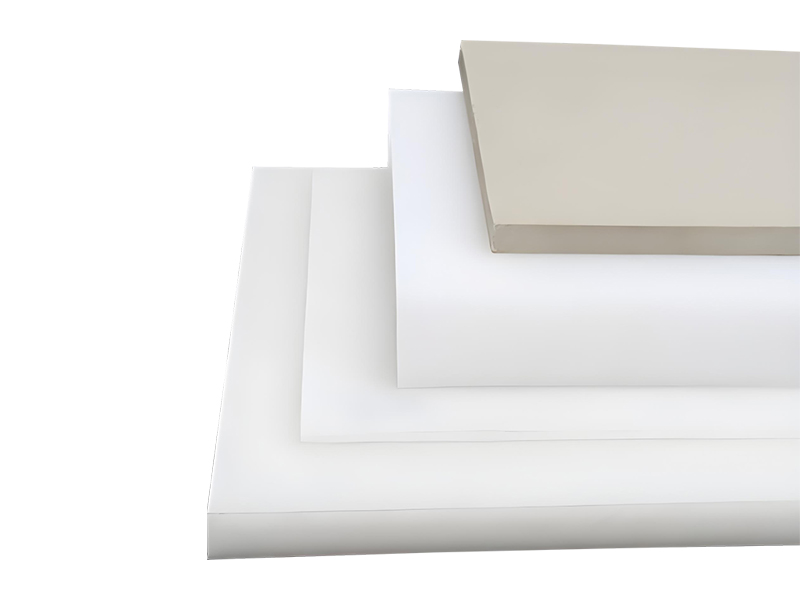 Natural PP SheetSpecifications & DescView Product →
Where PP Sheets Earn Their Keep
PP sheet wins wherever acid, alkali, salt water or food is present and dead-flat rigidity is not the priority.
| Application | Grade | Typical thickness | Why PP works |
| Chemical storage tanks and bunds | PPH | 10 to 30 mm | Resists dilute acids and alkalis and welds into monolithic walls |
| Plating and pickling lines | PPH | 15 to 40 mm | Handles warm electrolyte without creeping |
| Food processing tables | Natural PP | 10 to 25 mm | Non-porous, cleanable, suitable for food contact |
| Laboratory sinks and hood liners | PPH or natural PP | 5 to 20 mm | Chemically inert and easy to fabricate on site |
| Multipurpose engineering parts | PPH | 8 to 25 mm | Machinable, weldable and dimensionally stable |
Thicker is not stronger by default. In aggressive chemical service a properly welded 20 mm PPH wall routinely outlasts a 30 mm wall of the wrong grade, because creep behaviour and weld quality decide the outcome long before section thickness does.
Assemblies that mix several of these duties are where multipurpose PPH engineering sheet pays for itself, since the same panel can be machined for a fitting, welded into a tank wall and left unpainted outdoors.
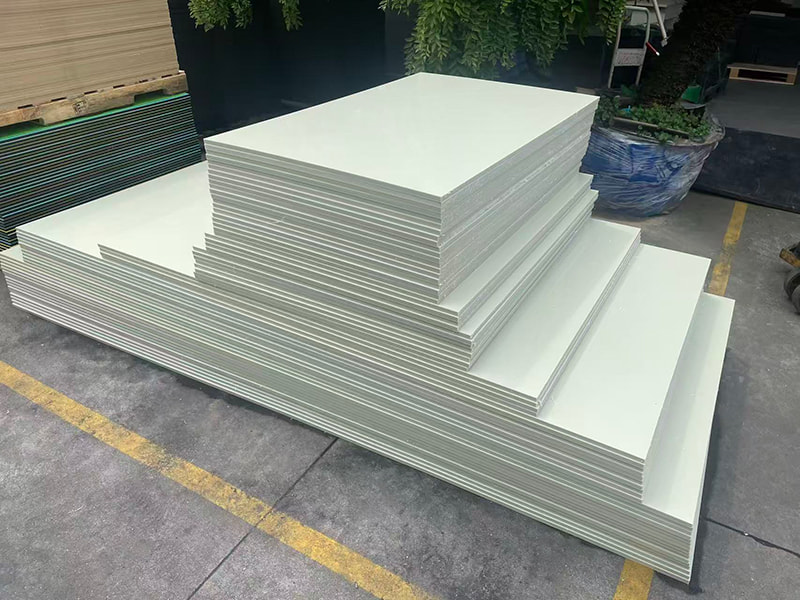 Eco-Friendly Non-Toxic Multi-Purpose PPH Engineering Plastic SheetSpecifications & DescView Product →
Fabrication: Welding, Machining and Thermoforming
PP sheet is joined by welding, because its low surface energy makes structural adhesives unreliable; hot air and extrusion welding handle most assemblies, while hot plate welding suits thick sections and long seams.
Prepare the edges
Cut square, scrape off the extrusion skin and wipe the joint clean. Surface contamination is the most common cause of a seam that weeps under pressure.
Set weld parameters
Hot air welding runs at roughly 250 to 290 C depending on thickness, at a travel speed the operator can hold steady. PPH prefers a matched rod rather than a general purpose one.
Weld in passes and let it cool
Lay the bead in alternating passes and let each one cool before the next. Rushing traps voids inside the seam that only appear when the vessel is filled.
Relieve stress, then machine
Thermally cut or heavily welded panels should relax before drilling, otherwise holes drift out of position. PP machines cleanly with sharp, high rake tooling and expands about 0.15 mm per metre per degree Celsius, so outdoor panels need room to move.
Sourcing PP Sheets Without Surprises
A usable PP sheet specification fits on one purchase order: grade, melt flow rate, thickness with a numeric tolerance, sheet size with squareness, colour reference, surface finish, edge condition and the certification the finished part must carry.
- Grade and melt flow rate stated as a value range, not a trade name
- Thickness with a numeric tolerance rather than the word commercial
- Sheet size plus a squareness figure, since a 3 mm diagonal error ruins nesting
- Colour reference by physical sample or a delta E target for repeat orders
- Surface finish and which face it applies to
- Food contact or flame certification the end product needs, plus packing and edge protection
Production scale and logistics decide whether that specification is honoured on every delivery. Xinsen Plastic has manufactured plastic sheet at its own plant in Jiaxing, Zhejiang since October 2001, with the factory sitting inside the Yangtze River Delta between Shanghai, Hangzhou and Suzhou, close to both Shanghai and Ningbo ports, and shipping to buyers across North America, Europe, South America, Southeast Asia and southern Africa. The location advantage behind that delivery schedule is worth weighing when a project has a fixed installation date.
Twenty years of sheet extrusion is mostly a story about tolerances. The suppliers whose panels do not come back are the ones who hold thickness, flatness and colour batch after batch, and who answer a specification question with a number instead of an adjective.
PP Sheet Questions Buyers Ask
What thickness does PP sheet come in?
Extruded PP sheet runs from 1 mm to about 40 mm, with 3 to 20 mm covering most tank, liner and food equipment work. Tolerance tightens as the sheet gets thinner, so a 2 mm sheet is usually held to plus or minus 0.15 mm while a 30 mm sheet may run to plus or minus 0.8 mm.
Is PP sheet food safe?
Natural, unpigmented PP sheet is widely used for cutting boards and work tables because it is non-porous and absorbs almost no water. Confirm the food contact declaration with the supplier, since coloured grades depend on the masterbatch used.
Can PP sheet be glued?
Not reliably for structural work. Polypropylene has a low surface energy, so adhesives struggle to form a durable bond. Hot air, extrusion rod or hot plate welding is the standard method, and a good welded joint approaches parent material strength.
What is the difference between PP and PPH sheet?
Both are polypropylene. PPH uses a higher molecular weight, higher crystallinity grade that resists creep and holds stiffness better at elevated temperature, which is why it is preferred for chemical vessels and plating lines. Standard PP stays the economical choice for covers and light-duty parts.
PP sheet is a simple material with a short specification list, and almost every failure traces back to one line on that list being left vague. Fix the grade, pin the thickness tolerance, name the finish and agree the weld procedure before the first panel is cut, and the sheet will quietly do its job for years.
Related products
-
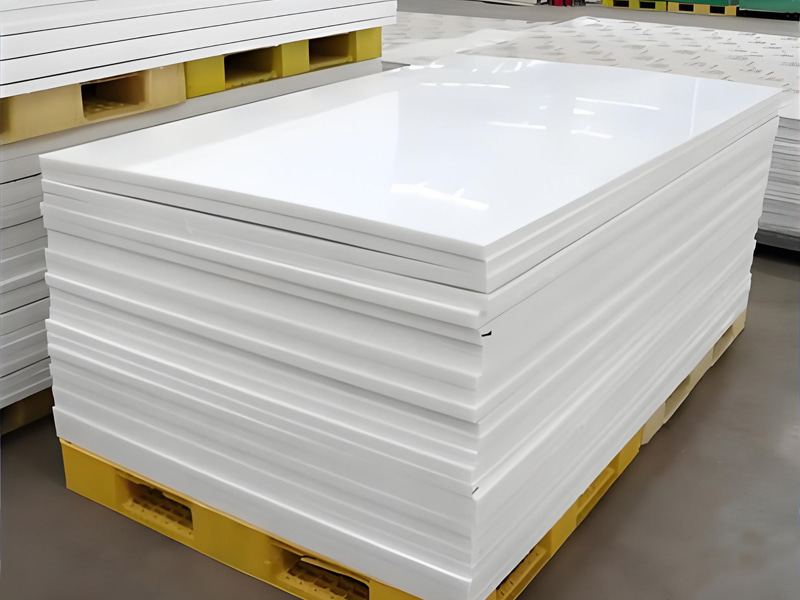
-

Industrial-Grade PPH High-Strength Corrosion-Resistant Plastic Sheet is produced from polypropylene homopolymer (PPH) resin, offering excellent mechanical strength combined with outstanding resistance...
-

Eco-Friendly Non-Toxic Multi-Purpose PPH Engineering Plastic Sheet is produced from polypropylene homopolymer (PPH) resin that is inherently environmentally friendly and non-toxic, free of heavy metal...
-

Natural PP Sheet (Polypropylene) is renowned for being lightweight with high toughness and heat resistance, widely used in industrial pipe connections, aquaculture tanks, and laboratory equipment. It ...
-
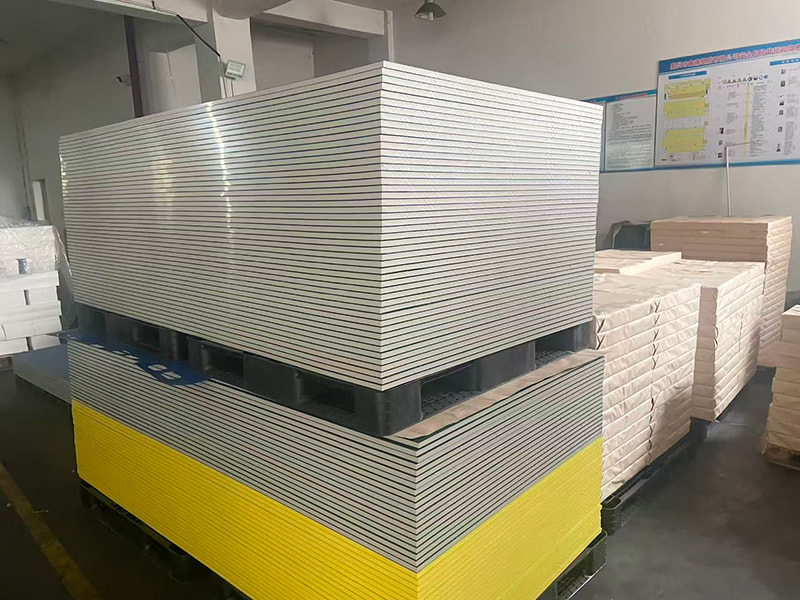
Outdoor engineering HDPE two-tone sandwich sheet is built from two layers of HDPE in contrasting colors fused into a single sandwich structure, with a distinct surface tone over a differently colored ...
Get In Touch
If you have any questions regarding, feel free to contact us at any time
-
 justin@xinsenplastic.com
 -
 +86-13586463708
 -
 Shenglong Industrial Park, Wangdian Town, Xiuzhou District, Jiaxing City, Zhejiang Province
Copyright © Jiaxing Xinsen Plastic Co., Ltd.
All Rights Reserved.
Plastic Sheets Manufacturers in China
