

 English
 Español
Outdoor engineering HDPE two-tone sandwich sheet is built from two layers of HDPE in contrasting colors fused into a single sandwich structure, with a distinct surface tone over a differently colored ...


News
Home / News / Industry News / HDPE Sheets: Grades, Thickness Tolerance, and Sourcing Guide for Buyers
HDPE Sheets: Grades, Thickness Tolerance, and Sourcing Guide for Buyers
2026-09-23
Content
An HDPE sheet order rarely fails at the extruder. It fails earlier, when a buyer sends a thickness, a colour code and a quantity without saying what the panel has to survive for the next five years. The same 12 mm high-density polyethylene panel behaves very differently in a playground, a chemical tank farm and a commercial kitchen, and most of that difference is decided before the first pellet is melted.
Three numbers carry most of the risk in an HDPE sheet specification: density, thickness tolerance and continuous service temperature. Everything else, including colour and surface texture, is cosmetic by comparison.
0.94-0.96g/cm3 typical density range
80 Capproximate continuous service temperature
1-50 mmcommon extruded sheet thickness range
This guide covers what HDPE sheet actually is, how the four common constructions differ, which grades suit which environments, and which details to lock down before you approve a sample.
What an HDPE Sheet Actually Is
An HDPE sheet is a flat thermoplastic panel made from high-density polyethylene, normally with a density between 0.94 and 0.96 g/cm3 and a linear molecular structure that gives the material its stiffness, chemical resistance and very low moisture uptake.
Definition: HDPE sheet is polyethylene with a density of 0.941 g/cm3 or higher, supplied as flat extruded or compression moulded panels. Below that threshold the same polymer family is classified as LDPE or LLDPE, and it behaves noticeably softer, more flexible and less stable under load.
Four properties decide whether an HDPE sheet suits a job:
- Chemical resistance: resists most acids, alkalis, salts and alcohols at ambient temperature, but not strong oxidising acids.
- Moisture absorption: under 0.01 percent, so panels do not swell or lose dimensions in washdown areas.
- Impact behaviour: keeps useful impact strength at low temperature, which is why HDPE appears in outdoor and refrigerated equipment.
- UV stability: unstabilised sheet chalks and embrittles outdoors, so permanently exposed panels need a UV stabilised grade.
The three polyolefin sheet families are often quoted against each other, and the differences are practical rather than theoretical.
| Property | HDPE | LDPE | PP |
| Density (g/cm3) | 0.94 to 0.96 | 0.91 to 0.93 | 0.90 to 0.91 |
| Stiffness | High | Low | Medium to high |
| Continuous service temperature | Around 80 C | Around 60 C | Around 100 C |
| Chemical resistance | Good | Good | Very good |
| Moisture absorption | Under 0.01 percent | Under 0.01 percent | Around 0.03 percent |
| Typical sheet uses | Playground panels, tanks, cutting boards | Liners, flexible covers, protective layers | Chemical tanks, plating baths, wet benches |
How HDPE Sheets Are Made, and Why the Line Matters
Almost all HDPE sheet is produced on a flat die extrusion line, and how that line is run decides whether the panel stays flat after it has been cut, welded or thermoformed.
- Resin selection: virgin HDPE or a controlled blend, plus UV stabiliser and colour masterbatch.
- Compounding: pigment and additives dispersed evenly, because streaks show up permanently in the finished sheet.
- Flat die extrusion: melt pushed through a wide die, with screw speed and temperature profile setting the internal stress level.
- Three layer co-extrusion: for sandwich sheets, skin and core layers are extruded together and bonded as one panel.
- Embossing: smooth, matte or orange peel texture applied while the sheet is still soft enough to take the pattern.
- Cooling, trimming and annealing: uneven cooling is the usual cause of bowing, cupping and edge wave.
Three layer co-extrusion is what makes two-tone and three-colour sandwich sheets possible. The skins and the core are separate melt streams joined inside the die, so the colour runs through the skin instead of sitting on the surface as a coating that can wear away.
That flexibility is worth asking about during sourcing. A manufacturer that controls its own line, such as Xinsen Plastic, can adjust the temperature profile, the texture roll or the colour match for a single production run instead of pushing a buyer towards the closest stock grade.
Monocolor, Two-Tone, Three-Color Sandwich and Natural Sheet
HDPE sheet is sold in four practical constructions, and the choice between them is usually about appearance, edge visibility and cleaning rather than mechanical performance.
Monocolor
One colour through the full thickness. The simplest and usually the cheapest option, and the easiest to weld because there is no layer boundary to manage.
Two-Tone Sandwich
A core in one colour with skins in another. The contrast line shows on every cut edge, which is why it is common on children's products and equipment housings.
Three-Color Sandwich
Three distinct layers. Used where the edge is part of the design, such as higher-end play equipment, signage and marine panels.
Natural
Unpigmented and translucent white. The default choice for food contact and medical surfaces because there is no pigment to migrate.
Playground work is the clearest example of construction being decided by the environment rather than by appearance. A UV stabilised monocolor sheet is usually enough for a climbing panel, and it keeps edge detail simple.
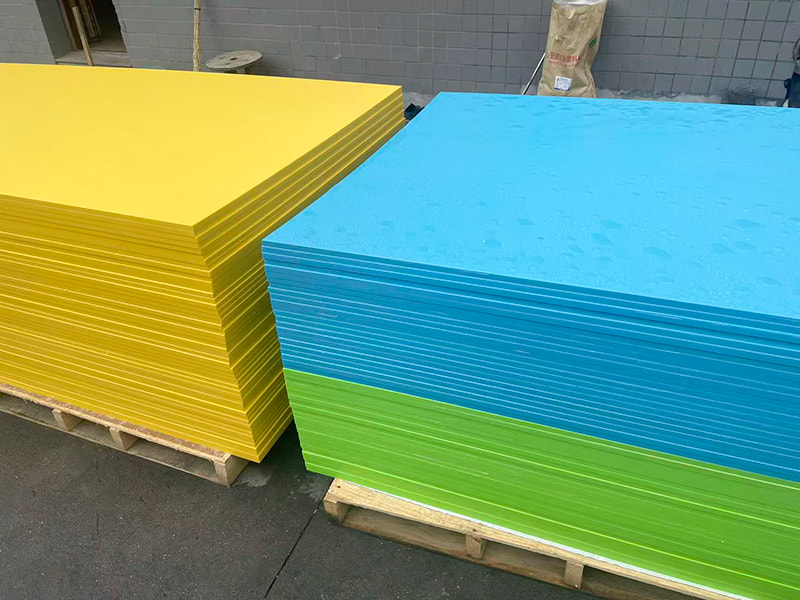 Playground Equipment HDPE Mono color SheetSpecifications & DescView Product →
The cut edge is the detail most buyers forget. A two-tone or three-colour sandwich sheet displays its layers on every sawn edge, so decide the edge treatment and colour order before the panels are cut, not after.
Matching Sheet Grade to the Application
Start from the environment the panel will live in, then work back to construction, colour and thickness. Most specification arguments disappear once the service environment is written down.
Playground and recreation
UV stabilised, impact modified grades, typically 12 to 20 mm thick, with rounded edges and fixings set back from the edge.
Marine and industrial
Higher density grades with salt spray and chemical resistance, thicker sections, and sandwich construction where the edge stays visible.
Food and medical
Natural unpigmented grade, smooth surface without texture that traps residue, thickness driven by cleaning and load requirements.
Marine and industrial work is where sandwich construction earns its cost. A three-colour panel with a corrosion resistant core holds up in washdown and salt spray environments, and the layer structure lets an inspector confirm at a glance that the correct sheet was installed.
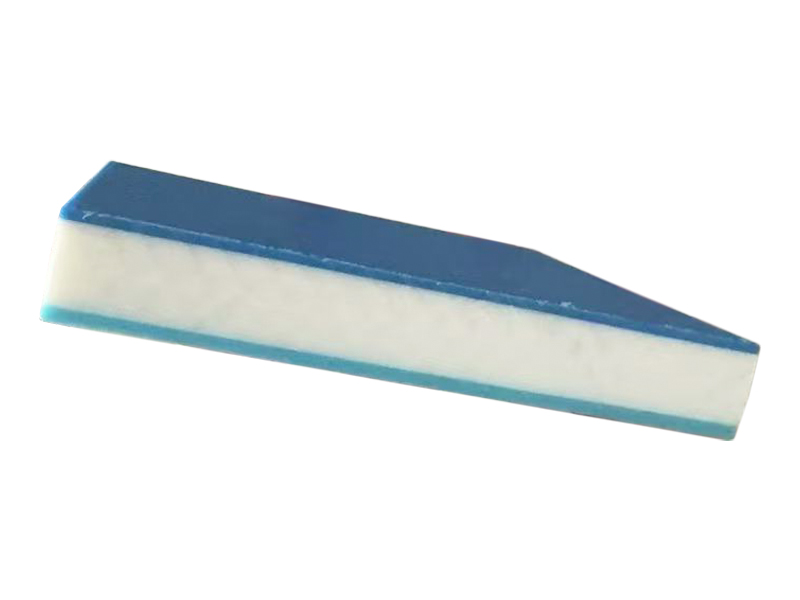 Marine and industrial grade HDPE Anti-Corrosion Sandwich PanelSpecifications & DescView Product →
Food contact sits at the other end of the spectrum. Natural HDPE carries no pigment, so there is nothing to migrate into the product being prepared, and the surface can be machined smooth for easy cleaning.
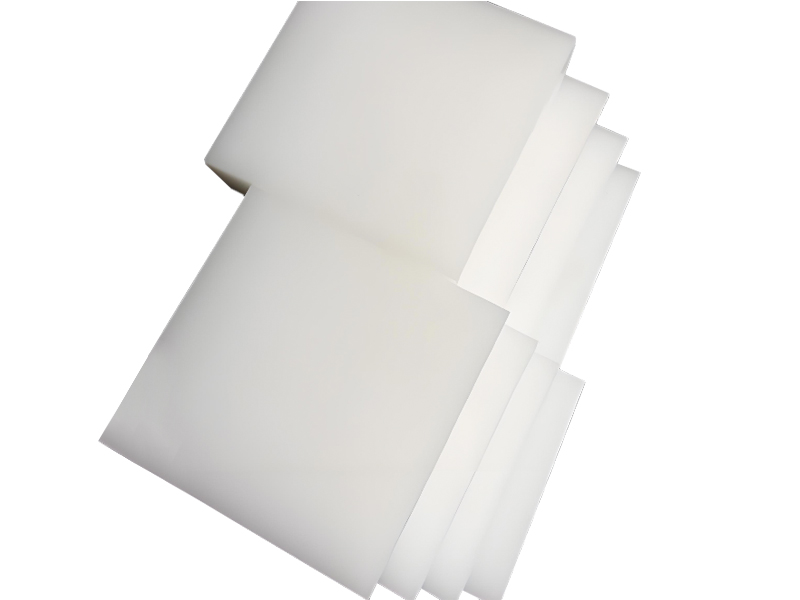 kitchen cutting boards Food grade Natural HDPE SheetSpecifications & DescView Product →
Rule of thumb: if the sheet touches food or skin, specify natural unpigmented HDPE. If it stays outdoors for years, specify a UV stabilised grade. If it holds chemicals, fix the thickness, the weld detail and the resin grade before you discuss colour.
Specifying an HDPE Sheet Order
A usable HDPE sheet specification contains five parameters, and all five should be in writing before the order is released to production.
| Parameter | What to state | Why it matters |
| Thickness and tolerance | Nominal thickness in mm plus an allowed deviation, commonly around plus or minus 5 percent | Drives stiffness, weight, fixing depth and fit with other components |
| Sheet size | Length and width in mm, plus a trimming allowance for CNC nesting | Reduces offcut waste on large panel runs |
| Colour | A physical sample or colour reference approved by both sides | Prevents batch to batch colour drift |
| Surface | Smooth, matte or orange peel, on one face or both | Affects slip resistance, cleaning and appearance |
| Grade | Virgin or recycled content, UV stabiliser, food contact documentation | Determines service life and whether the sheet is legal for the use |
Suppliers normally come back with three questions, and answering them early shortens the quotation cycle:
- What is the service environment, including temperature range and chemical exposure?
- How will the sheet be fabricated: CNC routing, welding, thermoforming or bending?
- What documentation is required, such as food contact compliance or batch traceability?
Ask for a thickness map rather than a single measurement. Extruded HDPE sheet is commonly quoted at plus or minus 5 percent, and a sheet that reads on nominal at the centre but thin at the edges will still pass a one point check.
Sourcing, Quality Control and Logistics
The lowest price per kilogram rarely produces the lowest total cost, because colour rejects, thickness rework and replacement shipments are paid for by the buyer in time rather than in money.
Signals of a controlled supply
- Thickness tolerance stated as a number, not a promise
- Batch samples available before mass production
- Texture and colour confirmed against a physical sample
- Food contact or UV documentation supplied on request
- Clear statement of virgin versus recycled content
Warning signs in a quotation
- Standard tolerance with no figure attached
- Colour approved from a photograph
- No sample stage, or samples that cannot be traced to a batch
- Delivery dates quoted before the specification is fixed
- Recycled content mentioned only after you ask
Where the sheet is produced also affects freight cost and lead time. Sheet made in the Yangtze River Delta, for example, moves through Shanghai and Ningbo, which shortens ocean transit for North American and European buyers. Read how the Yangtze River Delta location shapes delivery.
Insist on a batch sample before mass production. Colour, texture and thickness tolerance are all easy to check on a single sheet and almost impossible to correct once several hundred sheets are on the water.
Frequently Asked Questions
Are HDPE sheets food safe?
Natural, unpigmented HDPE is the grade normally used for food contact, and sheet manufacturers typically formulate it to comply with regulations such as FDA 21 CFR 177.1520. Coloured sheet is not automatically food safe, because the pigment and any additives need their own compliance documentation. Ask for the grade certificate rather than a general statement about the material.
What thickness of HDPE sheet is used for playground equipment?
Most playground panels fall between 12 mm and 20 mm. Thicker sheet resists flexing under load and holds fasteners more securely, while thinner sheet is used for non-structural cladding. The deciding factor is usually the span between fixings rather than the total load.
Can HDPE sheet be welded and machined?
Yes. HDPE welds reliably with hot air, extrusion or butt fusion methods, and it machines much like a soft hardwood. Use sharp tooling, keep feed rates high enough to avoid heat build up, and clamp the sheet well, because the material moves more than metal under cutting forces.
Does HDPE sheet degrade in sunlight?
Unstabilised HDPE chalks and becomes brittle after prolonged UV exposure. UV stabilised grades extend outdoor service life significantly, but no polyolefin sheet is immune indefinitely, so plan inspection and replacement intervals for any panel facing direct sun.
HDPE sheet is a straightforward material with a specification list that is easy to get wrong. Density, thickness tolerance and grade decide performance; colour and texture only decide whether anyone notices.
Get the first three right, and the rest of the order tends to look after itself.
Related products
-
-
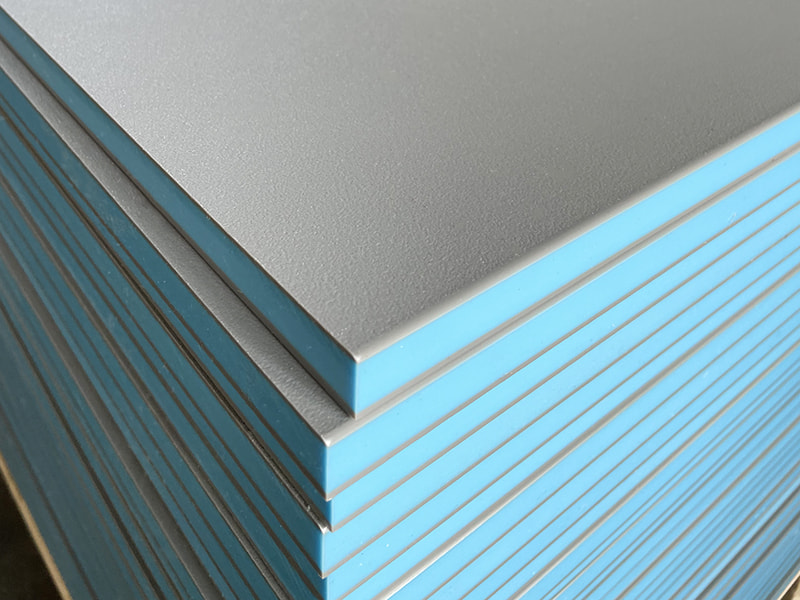
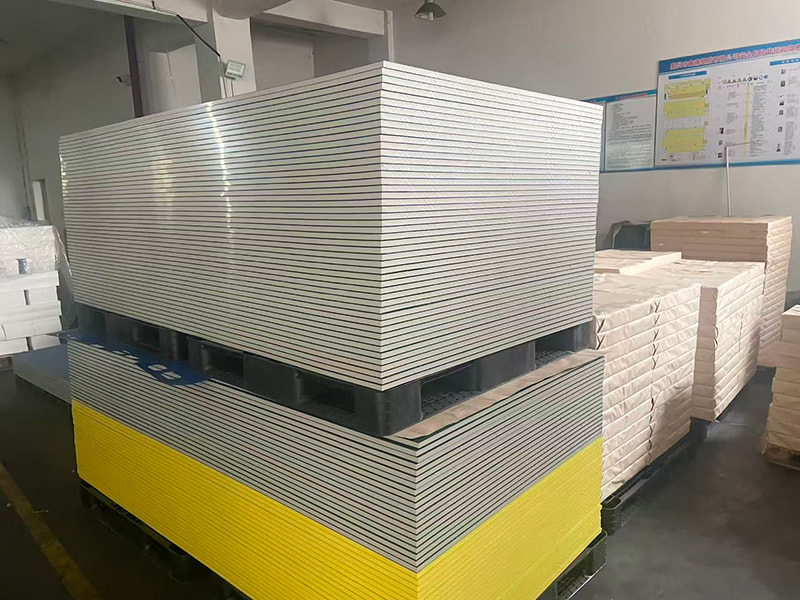
Children's Products Eco-friendly HDPE Two-Tone sandwich sheet is specifically developed for child-related products, combining two layers of contrasting-colored HDPE into a single sandwich structure wi...
-
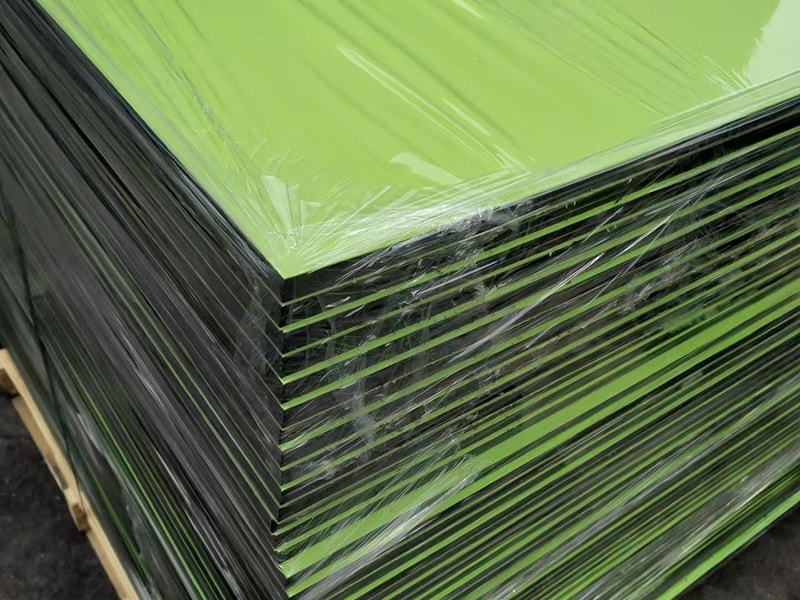
Indoor & Outdoor HDPE Flame-Retardant Dual-Color Sandwich Sheet builds on the standard dual-color sandwich structure by specifically reinforcing fire-retardant performance, allowing it to meet str...
-
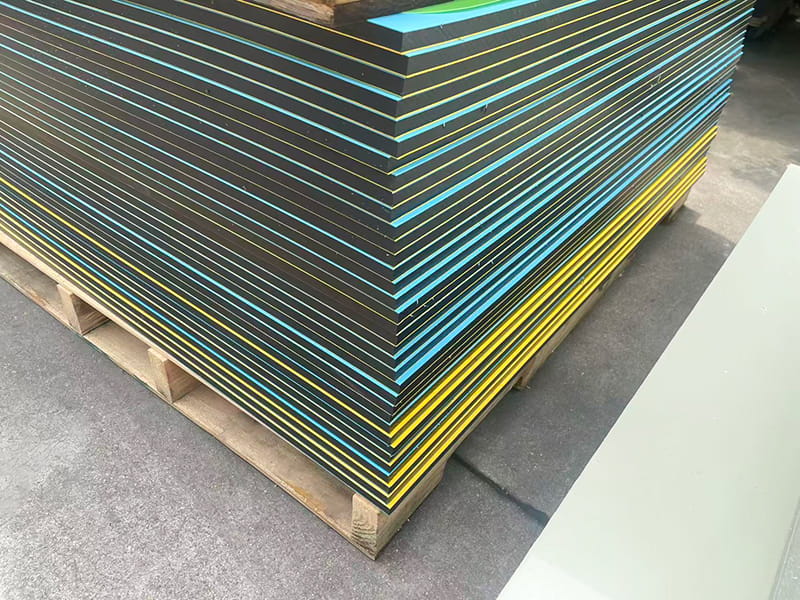
Amusement Facilities Child-Safe HDPE Tri-color sandwich Sheet is built from three layers of differently colored HDPE fused into a single specialized sandwich structure, allowing layered engraving or r...
-

Marine and industrial grade HDPE Anti-Corrosion Sandwich Panel is specifically engineered for harsh marine and industrial environments, built from a high-strength sandwich structure with outstanding c...
Get In Touch
If you have any questions regarding, feel free to contact us at any time
-
 justin@xinsenplastic.com
 -
 +86-13586463708
 -
 Shenglong Industrial Park, Wangdian Town, Xiuzhou District, Jiaxing City, Zhejiang Province
Copyright © Jiaxing Xinsen Plastic Co., Ltd.
All Rights Reserved.
Plastic Sheets Manufacturers in China
